Electrical test and tag across Bunbury and the South West
Onsite electrical test and tag for workshops, industrial sites and commercial workplaces. Harvey Test & Tag tests single-phase and three-phase equipment to AS/NZS 3760 and provides barcoded asset reports for your workplace safety records.
Tell us your location, the equipment you use and your approximate item count. We'll provide a quote and discuss how to fit testing around your working day.
What is electrical test and tag?
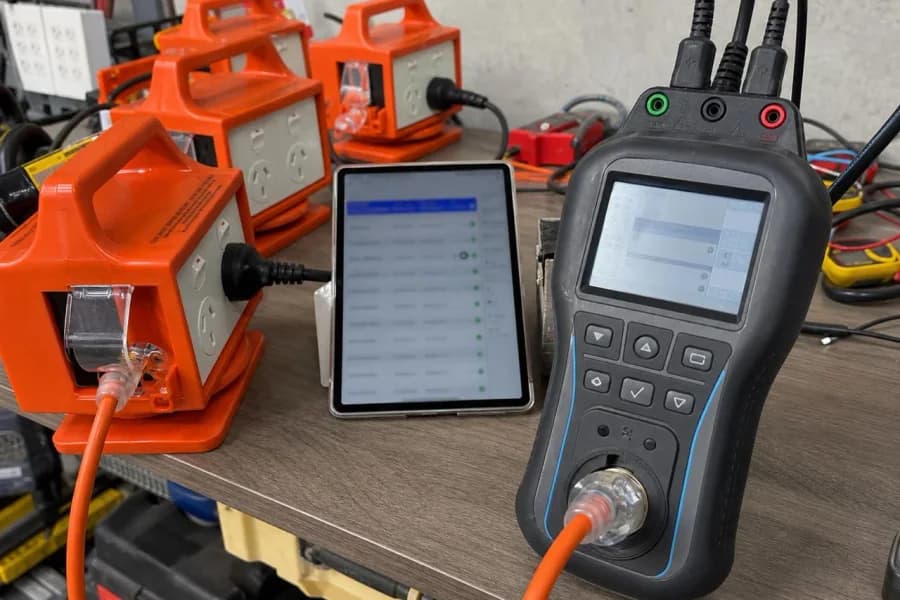
Electrical test and tag involves visually inspecting electrical equipment, carrying out the appropriate electrical tests and recording the result. The tester then attaches a tag showing the equipment's testing status and next scheduled test date.
The process helps identify damaged leads, faulty plugs and electrical faults that you may not notice during normal use.
At Harvey Test & Tag, we inspect and test equipment onsite, record each item in a barcoded asset report and identify equipment that needs to come out of service.
What we test and tag
- Power leads and extension leads
- Power tools and battery chargers
- Portable RCDs and safety switches
- Single-phase appliances and office equipment
- Three-phase leads, machinery and welders
- Workshop, kitchen and site equipment
We carry more than twenty three-phase adaptors, so single-phase and three-phase equipment can be tested in the same visit.
What equipment do we test?
We test a wide range of equipment connected to an electrical supply through a plug and flexible lead, including single-phase appliances and three-phase equipment.
Power tools and extension leads
 Power tools and extension leads
- Drills, grinders and saws
- Extension leads and cable reels
- Power boards and adaptors
- Battery chargers
Office appliances and IT equipment
 Office appliances and IT equipment
- Computers, monitors and docking stations
- Printers and copiers
- Kettles, microwaves and fridges
- Desk lamps, fans and heaters
Commercial kitchen equipment
 Commercial kitchen equipment
- Plug-connected cooking equipment
- Mixers, blenders and slicers
- Urns, warmers and toasters
- Cleaning and sanitising equipment
Workshop and industrial equipment
 Workshop and industrial equipment
- Plug-connected bench and pedestal machinery
- Compressors and pumps
- Site lighting and transformers
- Workshop vacuums and extraction equipment
Three-phase equipment
 Three-phase equipment
- Three-phase machinery
- Leads and adaptors
- Large commercial kitchen equipment
- Welders and plasma cutters
We carry more than twenty three-phase adaptors to accommodate different connections. Tell us about your equipment when requesting a quote so we can confirm the testing requirements before visiting.
Welders can require additional safety testing beyond a general appliance test. See our welder testing service for more information.
We also test portable residual current devices, including RCD-protected leads and power boxes. An RCD is a safety switch designed to disconnect the supply when it detects certain electrical faults. Read about our RCD testing service or ask us to include RCD testing in your quote.
Why choose Harvey Test & Tag?
Single-phase and three-phase capability
We test office appliances, power tools and heavier workshop equipment in the same visit, subject to the equipment and testing requirements you confirm with us.

Electrical trade experience
Owner and manager Kris Urwin is electrical trade-qualified, with more than twenty years of experience across electrical safety testing, fire equipment servicing and workplace safety.

Barcoded equipment records
We record each item's location, testing result and next scheduled test date in a barcoded asset report. You can use these records to track equipment and support workplace safety reviews.

Calibrated testing equipment
Our testers use calibrated equipment, with annual calibration checks.

Clear quotes
We base your quote on the equipment, item count, location and site requirements. You receive the quote before booking.

Scheduling around your workplace
Tell us about production hours, equipment access and any restrictions on switching equipment off. We can discuss after-hours testing by arrangement.
Is test and tag required in Western Australia?
WA businesses must manage electrical risks in the workplace.
Specific inspection and testing requirements apply to plug-connected equipment used in operating conditions likely to cause damage or reduce its expected lifespan. These conditions can include moisture, heat, vibration, dust, corrosive chemicals and mechanical damage.
For example, a power tool used in a dusty workshop faces different risks from a monitor that stays on an office desk.
Construction and demolition sites have separate requirements. Site rules and contractual requirements may also affect your testing arrangements.
We can help you identify the testing requirements for your equipment and working environment. Your workplace must also maintain safe equipment and act on faults or damage between scheduled tests.
How often should electrical equipment be tested?
The appropriate testing interval depends on the equipment, how you use it, its operating environment and the requirements that apply to your workplace.
An industry label alone does not determine the interval for every item on a site.
| Workplace conditions | What to consider |
|---|---|
| Construction and demolition | Construction-specific requirements and site testing schedules. |
| Workshops and factories | Exposure to dust, vibration, heat, movement and mechanical damage. |
| Commercial kitchens | Moisture, heat, cleaning chemicals and equipment use. |
| Cleaning work | Frequent movement, wet conditions and wear on leads. |
| Offices and retail | Whether equipment stays in place or faces movement, damage or other risks. |
| Accommodation facilities | The equipment's location, use and exposure to damage. |
We discuss these conditions when planning your visit and record the next scheduled test date for the equipment we test. Arrange an assessment sooner if you notice damage, overheating, an electrical fault or a change in how you use the equipment.
How our test and tag service works
Tell us about your site
Send us your location, approximate item count and the types of equipment you need tested. Mention three-phase equipment, portable RCDs, access restrictions and preferred booking times.
Receive your quote
We confirm the scope and provide a quote. We also discuss equipment access and any interruption needed during testing.
We inspect and test onsite
Our tester visually inspects the equipment and carries out the appropriate electrical tests. We record the results and attach the relevant tags.
Receive your equipment report
You receive a barcoded asset report for your records. We identify failed equipment and explain the next steps.
We also send a reminder when your next scheduled testing visit is due.
What happens if an item fails?
If we identify unsafe equipment, we explain the fault and the action needed.
- 01
We identify the equipment
We record the fault against the item's asset number and attach an out-of-service tag.
- 02
We remove it from use
We disconnect or isolate the equipment as appropriate and discuss how to prevent someone from using it again before repair or replacement.
- 03
We record the failure
Your asset report identifies the failed item and its status, so you can track the action required.
- 04
We explain the repair or replacement options
Some faults may allow an onsite repair where an appropriately licensed person can carry out the work. Other items need a repairer, replacement parts or replacement equipment.
- 05
We retest repaired equipment
Equipment must pass the appropriate checks before returning to service. We record the retest result against its asset number.
Barcoded reports for your equipment records
After testing, we provide an asset report identifying the equipment we tested, its location, result and next scheduled test date.
You can use the report to:
- Track equipment across your workplace.
- Identify items that need repair or replacement.
- Plan future testing.
- Provide testing records during a workplace safety review or audit.
Detailed electrical test results are available on request. Tell us before booking if your site manager or auditor requires a particular reporting format.
Book a site visit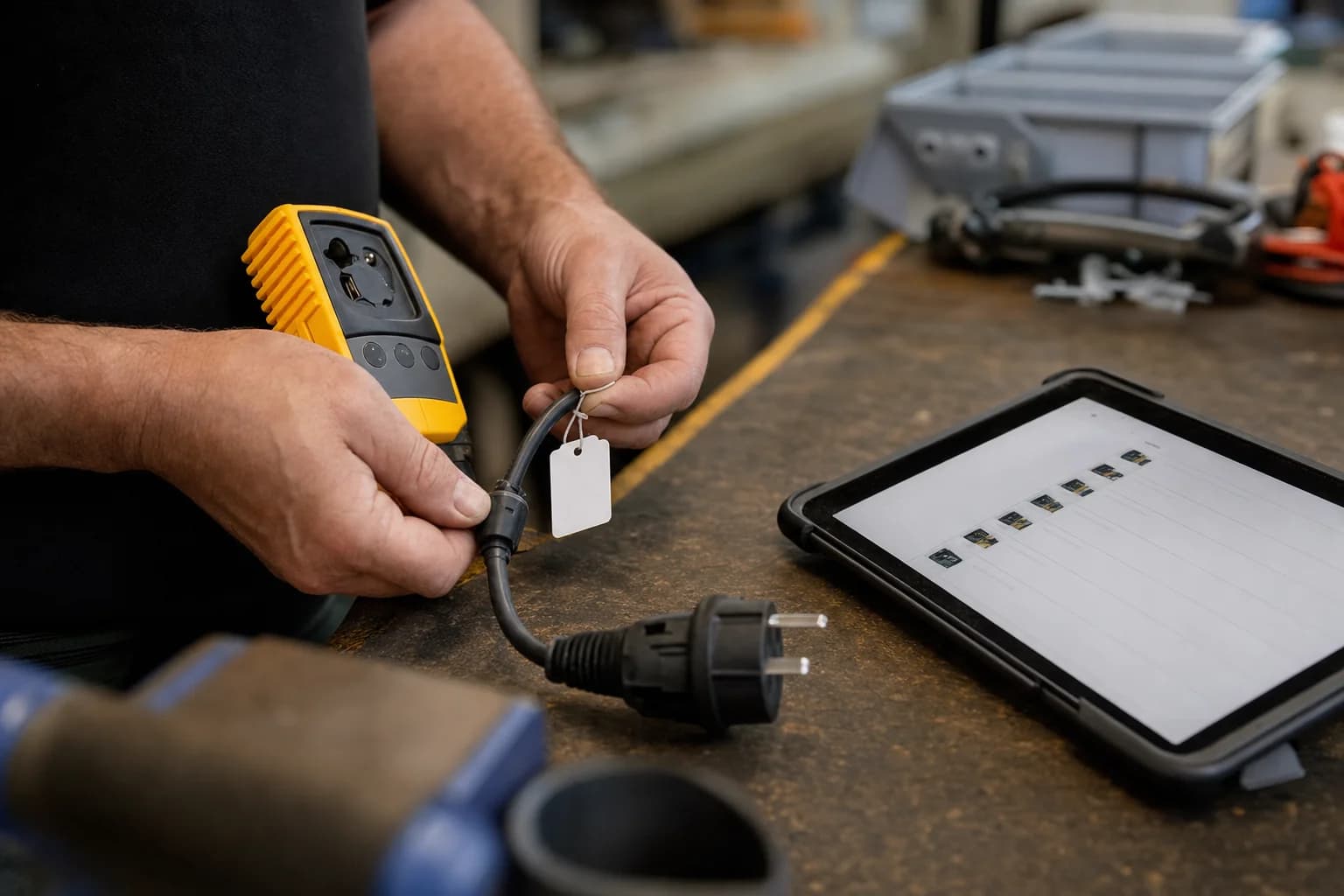
What affects the cost of test and tag?
We quote for your site and equipment. The main factors include:
- The number and type of items.
- Single-phase and three-phase testing requirements.
- Your location and equipment accessibility.
- How far equipment is spread across the site.
- Scheduling requirements and any additional testing.
An approximate item count is enough to start the conversation. Photos of unusual equipment or three-phase plugs can also help us understand the job.
Test and tag for working sites across the South West
Industry guides: Heavy diesel and mechanical workshops · Fabrication and welding workshops · Construction and trade businesses · Commercial kitchens and hospitality · Factories and warehouses
Based in the Harvey Shire, we provide onsite services from Waroona to Dunsborough and inland to Collie.
Our service areas include Harvey, Brunswick, Australind, Bunbury, Eaton, Dalyellup, Picton, Davenport, Busselton, Boyanup and Donnybrook.
Tell us your site address when requesting a quote so we can confirm availability and travel arrangements.
Common questions about electrical test and tag
The requirements depend on the equipment and operating environment. Plug-connected equipment exposed to conditions likely to cause damage has specific inspection and testing requirements. Low-risk office equipment may have different requirements from frequently moved tools or equipment used in wet or dusty conditions. Construction sites also have separate rules.
Brand-new equipment that has never been used generally does not need electrical testing before first use. You should still visually inspect it for damage from transport, delivery or installation. If the equipment needs ongoing testing, record when it enters service and make sure it joins the appropriate testing schedule. A new-to-service tag is one way to manage this. Construction and site-specific requirements may differ.
Electrical testing generally requires access to the plug and may involve disconnecting the equipment. Tell us about computers, production machinery or other equipment that cannot be switched off without preparation. We discuss access and scheduling before the visit.
The time depends on the item count, equipment type and access. Equipment spread across several buildings or involving three-phase connections can take longer than an accessible group of office appliances. We discuss the expected duration when quoting.
After-hours testing is available by arrangement. Mention your preferred hours when requesting a quote so we can discuss availability.
Yes. We provide a barcoded asset report identifying the equipment we tested, its location, result and next scheduled test date.
Yes. We carry more than twenty three-phase adaptors. Send us details or photos of your connections so we can confirm the scope before visiting.
A tag records the testing status at the time of inspection. Equipment can develop faults or suffer damage afterwards. Continue checking for visible damage and stop using equipment if you suspect a fault, even if its next scheduled test date has not arrived.

Reviewed by Kris Urwin, Owner and Manager of Harvey Test & Tag. Kris is electrical trade-qualified with more than 20 years of experience in electrical safety testing, fire equipment servicing and workplace safety across the South West.
Ready to book electrical test and tag?
Tell us your site location, approximate item count and equipment types. We'll provide a quote and discuss a suitable time for your visit. Local to the Harvey Shire, onsite across the South-West including Bunbury, Australind, Busselton and Collie.
Other services we cover