Fire extinguishers can become unsafe or ineffective over time, but there is no single expiry period that applies to every model. For many refillable extinguishers, five years is a pressure-testing and servicing milestone. Replacement depends on the extinguisher's condition, service results and manufacturer's instructions. Aerosol extinguishers have a marked use-by date.
If you manage a workshop, office or commercial kitchen, check the extinguisher's service history alongside its age. An extinguisher hanging on the wall for years without attention needs an assessment before you rely on it.
At Harvey Test and Tag, we provide fire equipment inspections and servicing for businesses across Bunbury and the South West.
Quick answer
| Question | What to know |
|---|---|
| Do fire extinguishers expire? | Some have a stated expiry date. Others can remain in service subject to maintenance, testing and manufacturer requirements. |
| Do they need replacing after five years? | Five years generally marks a pressure-testing milestone for conventional portable extinguishers. Your technician can assess servicing or replacement. |
| Does an unused extinguisher need maintenance? | Yes. Age, damage and deterioration can affect equipment even without use. |
| Can you put back a partly used extinguisher? | Arrange professional refilling or replacement before returning it to service. |
| Do aerosol extinguishers expire? | Yes. Follow the marked use-by date and replace them after use. |
These distinctions matter because refillable cylinders and single-use aerosol products have different maintenance requirements. Product Safety Australia's aerosol extinguisher guidance explains the use-by labelling for aerosol products.
How long do fire extinguishers last?
The useful life of a fire extinguisher depends on its design, condition and maintenance. Avoid treating a general claim such as "all extinguishers last ten years" as a replacement rule for your equipment.
In its submission on extinguisher servicing and refurbishment, Fire Protection Association Australia explains that technicians can service and refurbish suitable extinguishers so they continue to meet performance requirements. It also notes that replacement can cost less than completing the five-yearly service in some cases.
For example, if your workshop extinguisher approaches its fifth anniversary, ask for a comparison between the required service and a suitable replacement. Your technician should explain the work involved and any defects that affect the decision.
Follow any replacement instructions specific to your model, even if another extinguisher on site has a different schedule.
Does five years mean expired?
A five-year-old extinguisher is generally due for a major service assessment. Fire and Rescue NSW advises pressure testing every five years through a fire extinguisher service organisation.
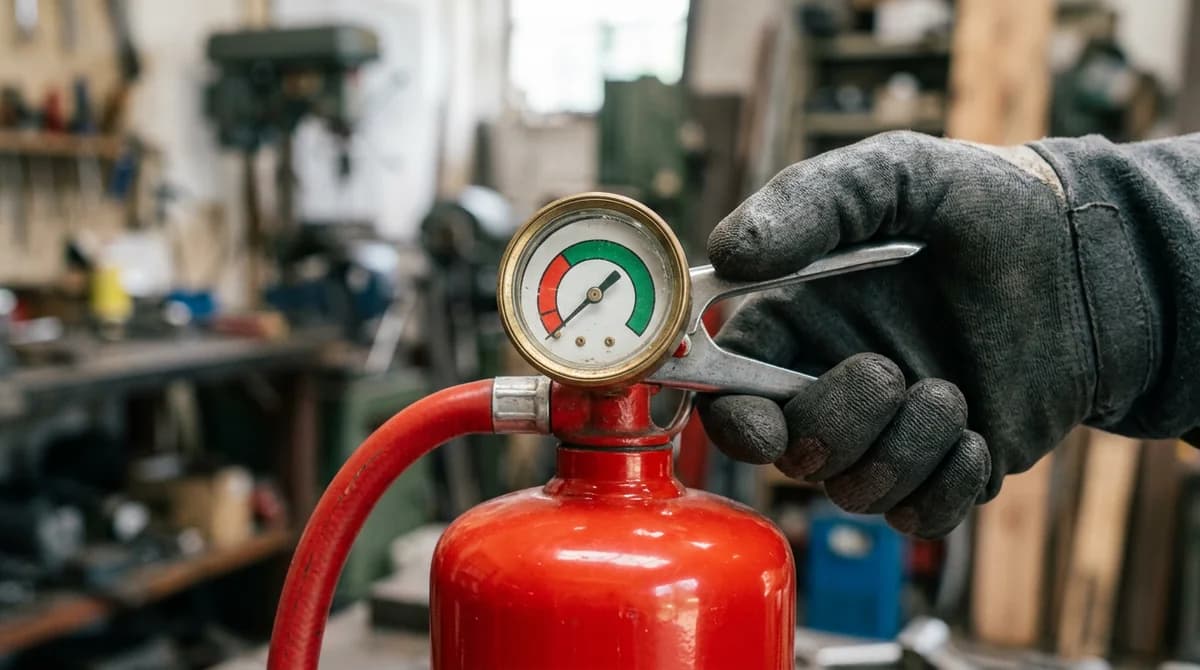
Checking the gauge alone does not complete that work. Quell's dry powder extinguisher instructions list operating-pressure checks and cylinder pressure testing as separate maintenance tasks. They also direct owners to check the cylinder's date stamp.
If your extinguisher has reached that milestone and you cannot find evidence of the required testing, arrange an assessment. Let your service provider confirm whether it can undergo further servicing or needs replacing.
Finding the dates on your extinguisher
You may find several dates or markings on the same extinguisher. Each serves a different purpose.
Manufacture date
Look for the cylinder's manufacture marking. Quell, for example, stamps the manufacture date onto the neck of its extinguishers, as explained in its fire extinguisher FAQs. Check the manufacturer's instructions if you cannot locate yours.
Service tag and report
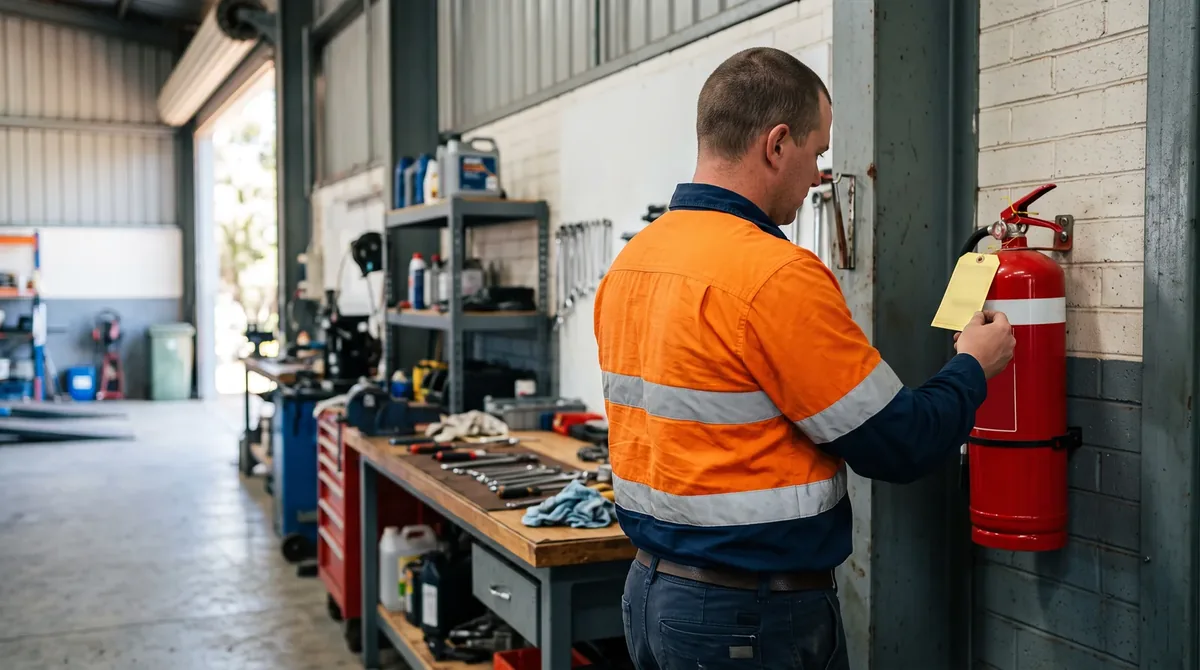
The service tag records maintenance visits. Your service report provides more detail, including defects or incomplete work. Keep both available so your technician can establish the equipment's history.
Use-by date
For an aerosol extinguisher, check the printed expiry date. Product Safety Australia requires these products to carry a nominated use-by date and identify them as single-use, non-refillable products.
If markings are unreadable or records are missing, ask your service provider to assess the unit rather than guessing its age.
Want us to test your equipment onsite?
Book a test and tag visitSigns your extinguisher needs attention
Arrange an inspection if you notice:
- Rust, corrosion or physical damage.
- A gauge reading outside the marked operating range.
- A blocked or damaged nozzle.
- Evidence that someone has discharged the extinguisher.
- Missing or unclear maintenance information.
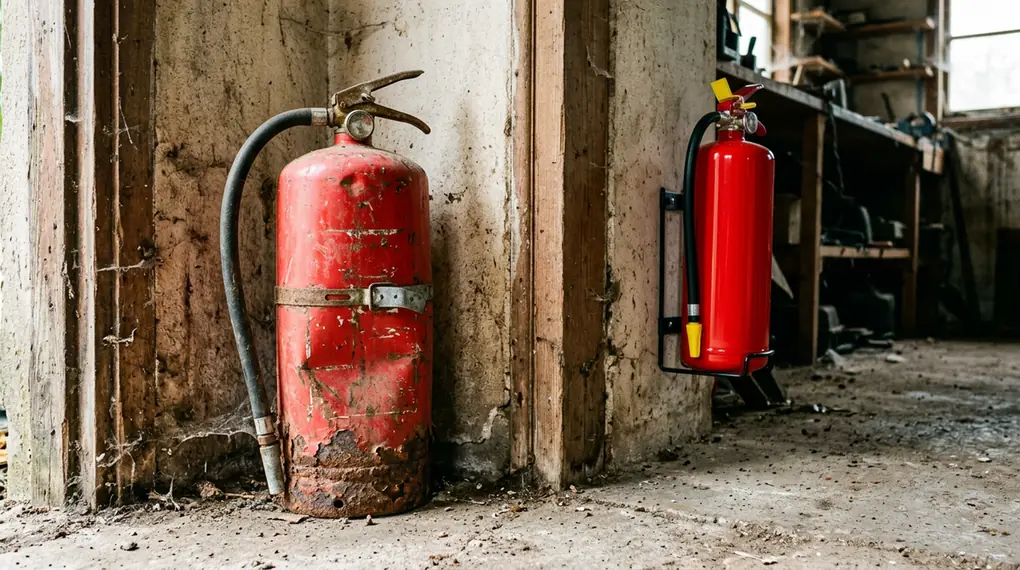
Quell's maintenance instructions identify damage, corrosion, pressure and nozzle condition as checks owners need to address. The manufacturer also recommends more frequent checks for equipment exposed to constant vibration or extreme heat, such as extinguishers in vehicles.
A green gauge reading is only one part of the assessment. It does not confirm the cylinder's condition or replace the other required checks.
Tell your service provider about any suspected fault and arrange suitable replacement protection while they assess the affected extinguisher.
How often should servicing happen?
For portable extinguishers maintained under AS 1851:2012, the service schedule includes six-monthly, yearly and five-yearly activities. Technicians complete different tasks at each interval, according to the equipment concerned.
The requirements applying to an installation can vary, so confirm the appropriate schedule for your premises and follow the manufacturer's instructions alongside it. Fire Protection Association Australia's portable extinguisher information bulletin explains the servicing intervals and records.
For your business, nominate someone to keep the records and arrange visits. This helps avoid missed servicing when staff change or responsibility passes between a landlord, tenant and property manager.
We can coordinate fire equipment servicing with your workplace electrical test and tag to reduce the number of separate site visits.

After using a fire extinguisher
Arrange servicing or replacement after any discharge, including a short burst. Fire and Rescue NSW advises that even partly discharged extinguishers need refilling through a service organisation. Single-use models require replacement.
Tell the service provider which extinguisher you used and where it belongs. Ask them to confirm the arrangements for restoring protection at that location.
Do not test an extinguisher by releasing a small amount of its contents to see whether it works.
Disposing of an old extinguisher
In Western Australia, DFES advises that fire extinguishers are hazardous waste and must not go in household bins or kerbside collections. It also states that local fire brigades do not accept used extinguishers for disposal.
For household equipment, check the WA Household Hazardous Waste Program for disposal information. Confirm acceptance conditions before travelling.
For business equipment, ask your fire service provider or a suitable waste contractor about collection and disposal. Explain the extinguisher type and whether it still contains extinguishing agent.
Frequently asked questions
Yes. Aerosol products have a use-by date regardless of use. Conventional extinguishers also need ongoing maintenance, including checks for damage and corrosion.
Arrange refilling through a fire extinguisher service organisation. Your provider can confirm whether the model supports refilling or requires replacement.
A tag indicates that servicing took place. Check the accompanying report for defects, issues and any work the technician could not complete.
Book fire equipment testing locally
Harvey Test and Tag provides fire extinguisher and fire blanket servicing across Bunbury, Harvey, Australind, Busselton, Collie and surrounding South West areas. We also supply replacement equipment and provide service records for your business.
If you are unsure about an extinguisher's age, condition or next service date, request a fire equipment testing quote or call (08) 9762 4510.

Written by Kris Urwin, Owner and Manager of Harvey Test & Tag. Kris is electrical trade-qualified with more than 20 years of experience in electrical safety testing, fire equipment servicing and workplace safety across the South West.