Key takeaways
- Test and tag is a visual inspection plus electrical testing of in-service equipment, not just a sticker.
- It applies to equipment connected by a flexible cord and plug, from extension leads to three-phase machinery.
- A failed item must be removed or isolated from service until it is repaired, replaced or disposed of.
- There is no single testing interval. The environment, use and previous results all shape how often testing is due.
- AS/NZS 3760 sets out the established process for in-service inspection and testing.
- A tag records condition on the day it was tested, so equipment still needs checking before use.
What is test and tag?
From power tools and extension leads to computers, kitchen appliances and workshop equipment, most workplaces depend on electrical equipment every day.
Regular use can take its toll. Leads can become damaged, plugs can crack and internal electrical faults can develop without being immediately visible. Test and tag helps businesses identify these problems before faulty equipment causes an electric shock, injury or fire.
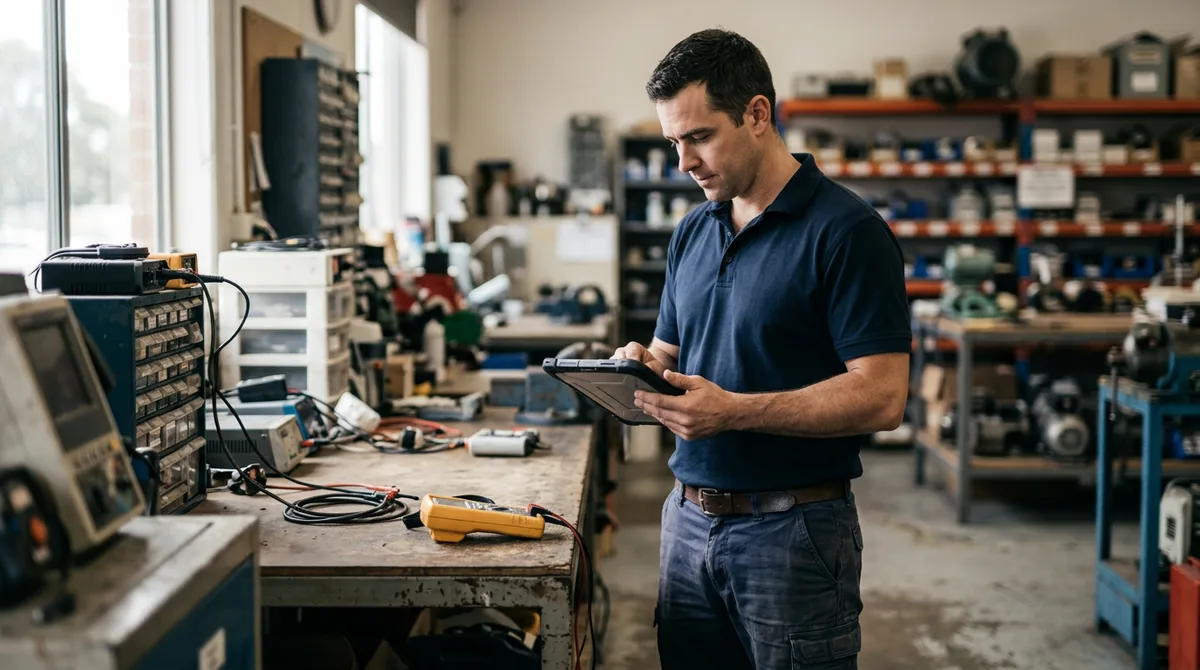
Test and tag is the common name for the safety inspection and electrical testing of in-service electrical equipment. It combines a detailed visual inspection with electrical tests suited to the appliance.
If an item passes, the result is recorded and a tag is attached. If it fails, it must be removed or isolated from service until it has been repaired, replaced or otherwise dealt with appropriately. Our guide to what happens when equipment fails test and tag walks through that process. Our electrical test and tag service covers both single and three-phase equipment onsite.
What equipment can be tested and tagged?
Test and tag commonly applies to electrical equipment connected to the power supply by a flexible cord and plug.
- Power tools
- Extension leads
- Power boards
- Battery chargers
- Computers and monitors
- Printers and office equipment
- Kettles, microwaves and kitchen appliances
- Vacuum cleaners
- Portable fans and heaters
- Workshop appliances
- Portable residual current devices
- Single-phase machinery
- Three-phase equipment
Equipment used in industrial, construction, agricultural and workshop environments can be particularly vulnerable to damage. Dust, moisture, heat, vibration, frequent transport and rough handling all reduce the safe working life of an appliance.
What happens during test and tag?
A proper test and tag service involves much more than attaching a label.
Visual inspection
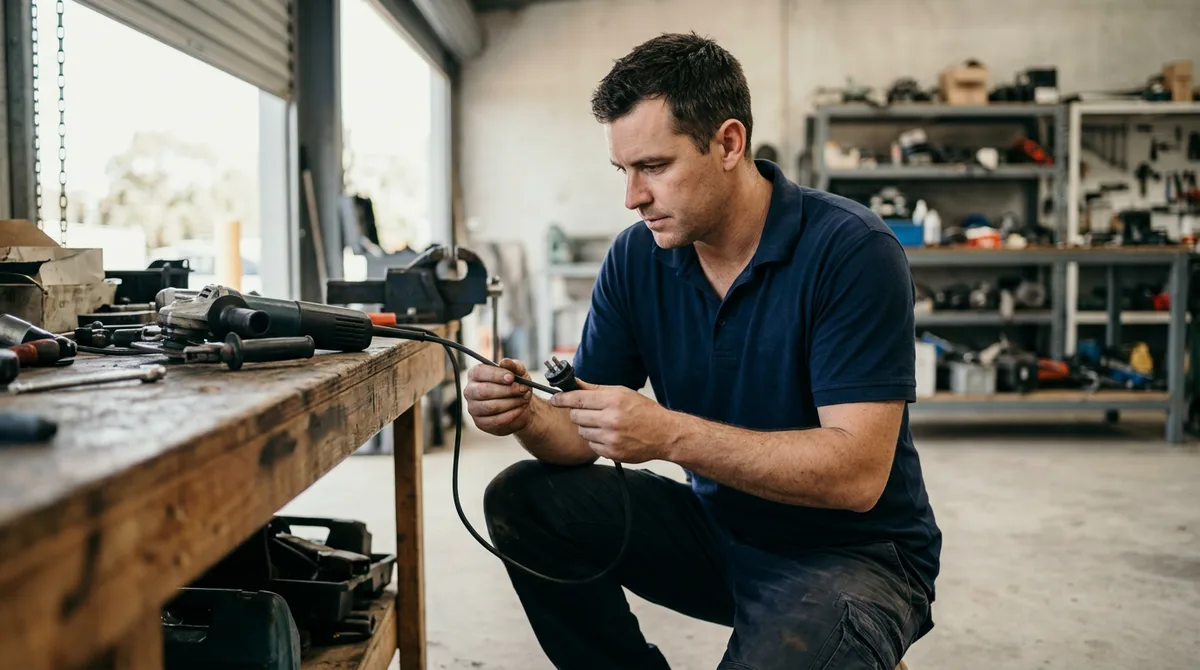
The first step is a careful visual inspection. The tester checks the appliance, plug, supply lead and accessible components for signs of damage or deterioration.
This may include looking for:
- Frayed, crushed or cut leads
- Exposed conductors
- Cracked plugs or casings
- Bent or loose plug pins
- Loose connections
- Burn marks and overheating
- Missing guards or covers
- Damaged switches
- Moisture or contamination
- Unauthorised modifications
- Poorly completed repairs
Electrical safety testing
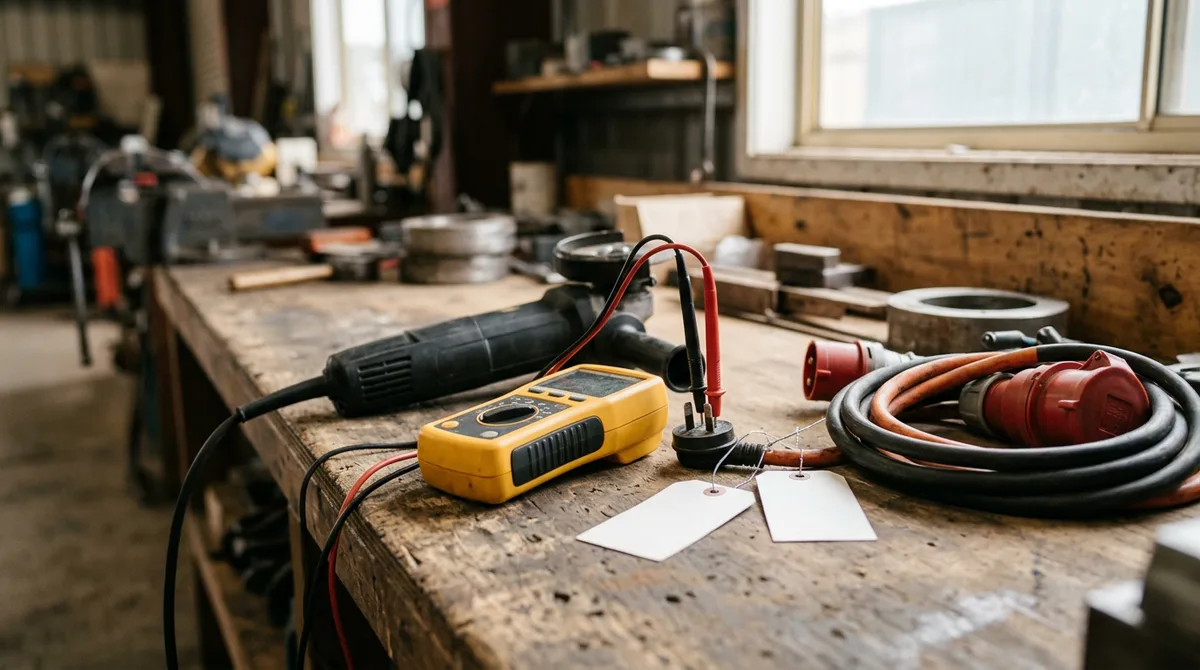
If the appliance is suitable to proceed, the tester performs the electrical tests appropriate to its construction and classification. Depending on the equipment, these may include earth continuity, insulation resistance, leakage current, polarity and portable RCD operating-time tests.
Not every appliance receives every test. A qualified and competent tester determines the appropriate procedure for the equipment being inspected.
Harvey Test & Tag can test both single-phase and three-phase appliances. All applicable equipment, including three-phase equipment, is leakage tested as part of our enhanced testing process. Fixed safety switches are covered separately under RCD testing.
Recording and tagging
Once the inspection and testing are complete, the result is recorded.
A passing item receives a tag showing relevant testing information. We also provide an equipment register and report, giving the business a clear record of the equipment tested, the results and future testing requirements.
A tag records the condition of an appliance when it was tested. It does not guarantee that the equipment cannot be damaged afterwards, so workers should continue checking equipment before use.
Want us to test your equipment onsite?
Book a test and tag visitIs test and tag legally required?
Australian workplace safety laws require businesses to manage electrical risks. The exact inspection and testing requirements depend on the type of workplace, how the equipment is used and the conditions to which it is exposed.
In Western Australia, businesses must eliminate electrical risks so far as reasonably practicable, or minimise those risks when elimination is not reasonably practicable.
Electrical equipment used in conditions likely to cause damage or reduce its expected life generally requires regular inspection and testing by a competent person. Construction and demolition sites also have specific electrical testing requirements.
Testing under AS/NZS 3760 provides an established process for the in-service safety inspection and testing of electrical equipment and RCDs.
How often should equipment be tested?
There is no single testing interval that applies to every appliance in every workplace. The correct interval can be influenced by:
- The working environment
- Frequency of use
- How often the equipment is moved
- Exposure to dust, water, heat or chemicals
- The risk of crushing or impact
- Manufacturer recommendations
- Previous inspection results
- Relevant standards and workplace requirements
A power tool used every day in a busy workshop will normally face different risks from a computer monitor sitting undisturbed in an office.
Why is test and tag important?
A structured testing program helps businesses:
- Identify unsafe electrical equipment
- Reduce the risk of electric shock and fire
- Remove failed appliances from service
- Maintain clear equipment records
- Keep track of future testing dates
- Support workplace safety procedures
- Protect employees, contractors and visitors
Equipment should also be checked before use. If an item has a damaged plug, frayed lead, cracked casing, burning smell or other warning sign, it should be disconnected and reported immediately rather than used until its next scheduled inspection.
Test and tag across the South-West
Harvey Test & Tag is based in the Shire of Harvey and provides onsite testing for businesses throughout the South-West.
Our regular service area extends from Waroona to Dunsborough and east to Collie, and you can see the full list on our service areas page. We can also travel further for larger projects and specialist welding-machine testing jobs.
With single and three-phase testing, equipment registers and an industrially focused onsite service, we make it easier to manage your workplace equipment. Get in touch to arrange a visit.
Frequently asked questions
Test and tag is the safety inspection and electrical testing of in-service electrical equipment. It combines a detailed visual inspection with electrical tests suited to the appliance. Passing items are recorded and tagged, and failed items are removed from service.
Western Australian workplace safety laws require businesses to eliminate or minimise electrical risks so far as is reasonably practicable. Equipment used in conditions likely to cause damage generally requires regular inspection and testing by a competent person.
There is no single interval for every workplace. The right frequency depends on the environment, how often equipment is used and moved, exposure to dust or moisture, previous results and any relevant standards or site requirements.
A failed appliance is clearly identified and must be removed or isolated from service. It can then be assessed by an appropriately qualified person, repaired where permitted, replaced or disposed of, and it must be tested again before returning to service.
Yes. Harvey Test & Tag tests both single and three-phase appliances onsite, and all applicable equipment including three-phase is leakage tested as part of our enhanced testing process.

Written by Kris Urwin, Owner and Manager of Harvey Test & Tag. Kris is electrical trade-qualified with more than 20 years of experience in electrical safety testing, fire equipment servicing and workplace safety across the South West.