Key takeaways
- A failed appliance has to come out of use until the fault is dealt with, even if it still runs normally.
- Working is not the same as safe. Visible damage alone can be enough to fail an item.
- Many faults are repairable. Whether repair is worth it depends on the fault, the equipment and the cost against replacement.
- WorkSafe WA recommends retesting after any repair or servicing that could affect electrical safety, before the item is used again.
- Removing a failed tag does not fix a fault, and an older pass tag does not establish safety after new damage.
- Give one person responsibility for each failed item so nothing is forgotten or put back early.
What happens when an appliance fails test and tag?
An appliance has just failed its electrical safety check. Does it need replacing? Can it be repaired? And what if it still seems to work perfectly?
When an appliance fails test and tag, it needs to be taken out of use while the fault is addressed. Depending on the problem, it may be repaired and tested before returning to service, or it may need replacing.
A failed result does not automatically mean the equipment belongs in the bin. It means a safety issue has been identified that needs attention before anyone uses it again.
Here is what that means for your business and what to do next.
Why can an appliance fail test and tag?
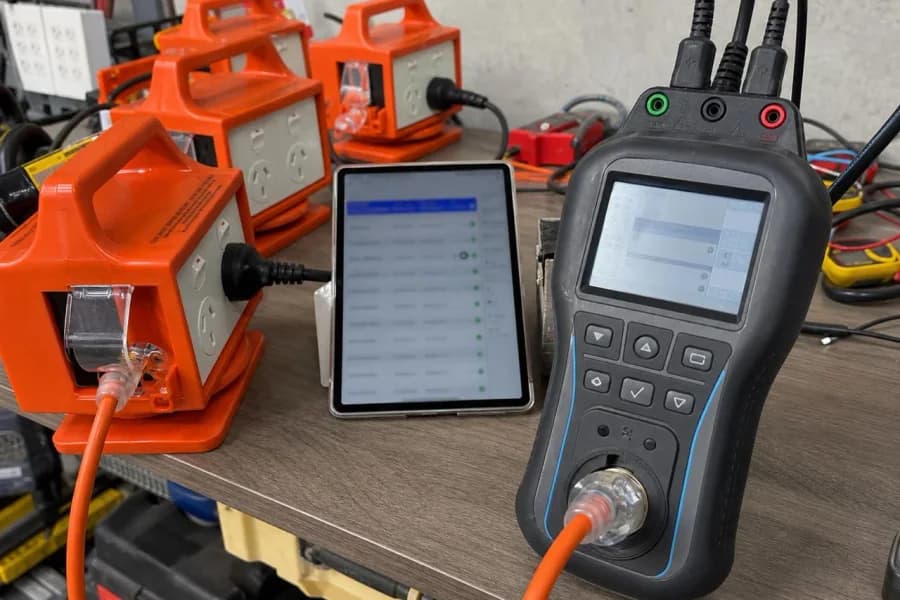
Electrical test and tag includes a visual inspection and appropriate electrical tests. Some problems are visible; others require testing equipment to detect.
Reasons for failure can include:
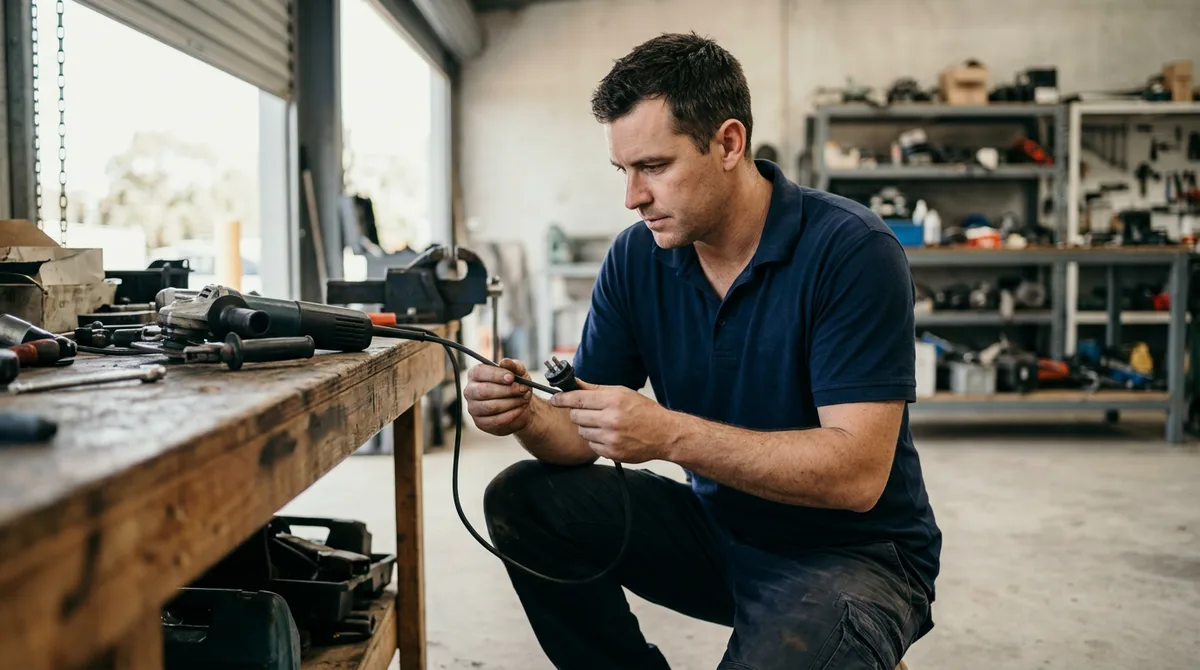
- Damaged leads, including cuts or exposed wires
- Cracked plugs, loose components or damaged housings
- Signs of overheating
- Inadequate cord anchorage, allowing a lead to pull loose
- Faults affecting insulation or protective earthing
A power tool might still run, or a kettle might still boil, despite having an electrical safety fault. Working normally is not the same as being safe to use. A visual defect can also be enough to fail an item on its own, because equipment does not need to fail an electrical measurement for damage to warrant taking it out of service.
What happens immediately after a failed result?
The priority is to stop someone from using the equipment accidentally.
WorkSafe WA's guidance says unsafe electrical equipment must be disconnected or isolated from its electricity supply. It must stay out of use until repair or testing establishes that it is safe, or it is replaced or permanently withdrawn. Unsafe equipment should also be labelled clearly. Read WorkSafe WA's electrical safety guidance.
For a business managing a failed portable appliance, the practical next steps are:
- Stop using it, and arrange safe disconnection or isolation
- Identify it clearly, so its out-of-service status is obvious
- Prevent accidental reuse, placing it in a designated secure area where appropriate
- Notify the responsible person, whether that is the supervisor, owner or equipment manager
- Arrange follow-up, and decide who will organise assessment, repair or replacement
A warning label communicates the problem, but it does not physically stop someone plugging the appliance back in. Avoid leaving failed items mixed in with usable tools or spare equipment.
Can a failed appliance be repaired?
Often, repair is an option. The decision depends on the fault, the appliance's condition, parts availability and the cost of repair compared with replacement.
A valuable workshop tool with a repairable lead fault may be worth keeping. A low-cost appliance with extensive damage may be more practical to replace. These decisions need an assessment of the actual equipment.
Before approving a repair, ask:
- What fault was identified?
- Is a repair practical for this item?
- What will the repair and subsequent testing cost?
- How long will the equipment be unavailable?
Who is allowed to carry out the repair
Testing competency and authorisation to carry out electrical repairs are separate matters. Being competent to test and tag does not automatically authorise someone to carry out every type of electrical repair, and some items need an electrical repairer or specialist service provider.
When arranging the work, provide the failed test result and the equipment details. That gives the repairer a clearer starting point than simply saying the appliance did not pass.
Harvey Test & Tag offers minor appliance repairs, with the available options depending on the fault and the equipment. Discuss your faulty equipment with us to find out what may be possible.
Want us to test your equipment onsite?
Book a test and tag visitWhen can the appliance go back into service?
Equipment should only return to use once its safety has been established.
WorkSafe WA recommends testing after repairs or servicing that could affect electrical safety, before the equipment returns to service. WorkSafe WA code of practice, section 3.4.
Once the required checks are satisfactorily completed, update the equipment's status and records so staff know it is available again. Staff should be able to tell at a glance which items are waiting on attention and which are ready for use.
To keep the process organised, assign one person to follow the item through from its failed result to its final outcome. That helps prevent equipment being forgotten in a cupboard or returned to a workstation prematurely.
Removing a failed tag does not fix a fault. Neither does an older pass tag establish that the appliance is safe after a new problem has been found.
What records should your business keep?
A useful equipment register makes it easy to see what failed and what happened next.
Alongside your required testing records, consider tracking:
- The equipment description and asset number
- Its usual location
- The fault reported
- Who is arranging the next action
- Whether it is awaiting repair, returned to service or permanently withdrawn
- Any repair and follow-up testing documentation
Why the asset number matters
Harvey Test & Tag provides detailed, barcoded reports to support equipment tracking. Matching follow-up actions to the same asset identifier helps keep the history clear.
Recording "drill repaired" may be confusing in a workshop with several identical drills. Recording the repair against a specific asset number makes the entry useful.
How can you reduce avoidable equipment damage?
Good day-to-day handling protects equipment between testing visits, and clear reporting means damage gets dealt with when it happens rather than at the next scheduled test.
- Check for visible damage before use
- Store leads where vehicles, doors and equipment are less likely to crush them
- Disconnect plugs by the plug body rather than pulling the cord
- Use equipment suitable for the conditions where it will be used
- Tell staff who to notify, and where to put an item that needs attention
If someone notices damage between scheduled tests, act on it then. An existing tag is not a reason to keep using equipment that may have become unsafe.
Need help with failed equipment in the South-West?
Harvey Test & Tag provides onsite electrical testing for industrial and commercial businesses across Harvey, Bunbury and surrounding South-West locations.
If an appliance has failed testing, tell us what the item is and what fault was reported. We can discuss the next steps and whether a minor repair may be available.
Contact Harvey Test & Tag or call 08 9762 4510.
Frequently asked questions
No. Keep it out of use until the issue has been addressed and it has been found safe. Normal operation does not rule out an electrical fault.
Not necessarily. Some faults can be repaired. The condition of the equipment and the practicality of repair will help determine the next step.
No. Some minor faults may be suitable for onsite repair, while others need specialist attention or replacement. The options depend on the equipment and the fault.
Share the equipment type, the asset number if you have one, the reported fault, the site location and any testing documentation. Photos of visible damage can help explain the issue, without handling or energising unsafe equipment.

Written by Kris Urwin, Owner and Manager of Harvey Test & Tag. Kris is electrical trade-qualified with more than 20 years of experience in electrical safety testing, fire equipment servicing and workplace safety across the South West.