Key takeaways
- Every item starts with a visual inspection, because an instrument alone cannot find every fault.
- Appliance class is identified before any test is selected, as the wrong procedure gives an unreliable result.
- Not every appliance receives every test. The method follows the appliance and its construction.
- Applicable equipment including three-phase is leakage tested as part of our enhanced process.
- You receive an equipment register and report, not just a tag on the day.
- Welding machines need their own periodic inspection, including VRD testing where applicable.
How we test and tag electrical appliances
If you have not arranged workplace appliance testing before, you may be wondering what actually happens during the service.
Does every appliance receive the same test? What happens when something fails? Will you receive a report? And can three-phase equipment be tested onsite?
At Harvey Test & Tag, we use a systematic process to identify, inspect, electrically test and record workplace equipment. We test single and three-phase appliances and provide an equipment register and report after the work. Here is what to expect.
Step 1: We identify the equipment
We begin by identifying the appliances included in the agreed service scope. Depending on the workplace, these may include:
- Power tools
- Extension leads
- Power boards
- Computers and monitors
- Office equipment
- Kitchen appliances
- Chargers
- Cleaning equipment
- Workshop machinery
- Portable RCDs
- Single-phase appliances
- Three-phase appliances
Items are easily overlooked when stored in vehicles, cupboards, workshops or behind furniture. Working systematically helps ensure the available equipment is accounted for. Where a workplace already uses asset numbers, we match the equipment to those records.
Step 2: We complete a visual inspection
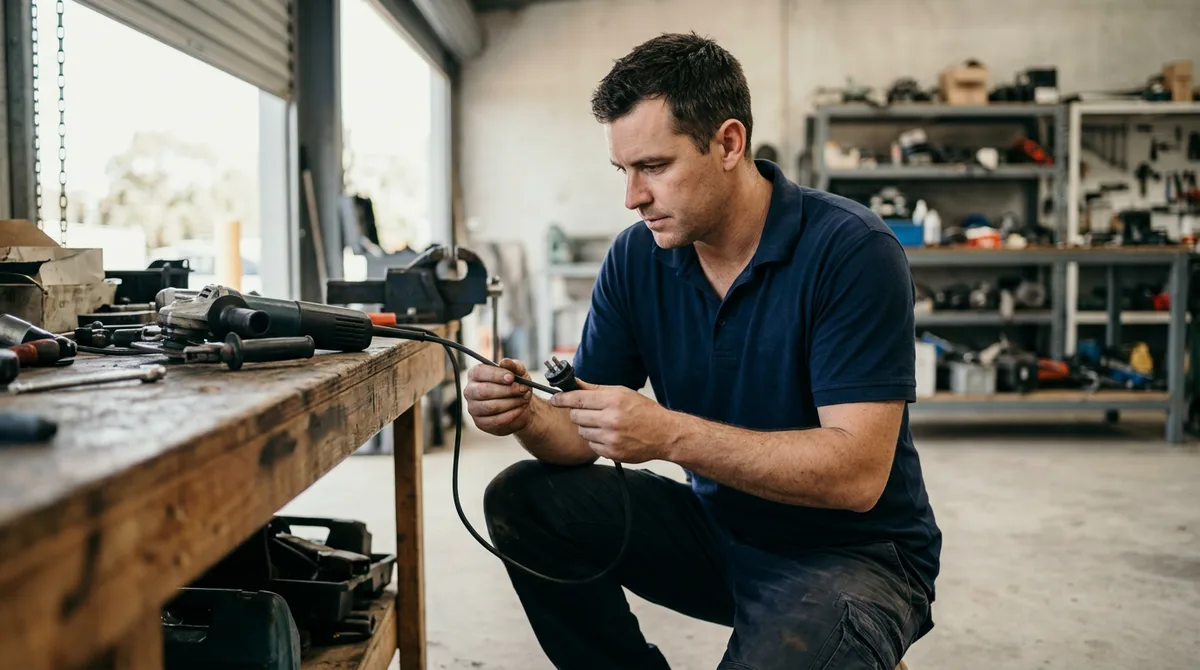
Every item starts with a visual inspection. This part of the process is essential because a testing instrument alone cannot identify every safety problem. We check for issues such as:
- Frayed or cut supply leads
- Crushed insulation
- Exposed conductors
- Cracked plugs
- Bent or loose pins
- Broken casings
- Burn marks
- Overheating
- Damaged switches
- Loose components
- Missing guards or covers
- Moisture or contamination
- Unauthorised modifications
- Poorly completed repairs
- Inadequate cord anchorage
If a visible defect makes an appliance unsafe, it can be failed without proceeding to an inappropriate electrical test.
Step 3: We determine the appliance class
Different electrical appliances are constructed in different ways. We identify the appliance class before selecting the correct tests.
Class I equipment
Class I appliances use protective earthing as part of their protection against electric shock. Appropriate testing may include earth-continuity testing together with an insulation-resistance or leakage-current test.
Class II equipment
Class II appliances use double or reinforced insulation and do not rely on protective earthing in the same way. They are commonly marked with the double-square symbol and require a different testing approach.
Correct classification is important because applying the wrong procedure can produce an unreliable result.
Step 4: We perform the electrical tests
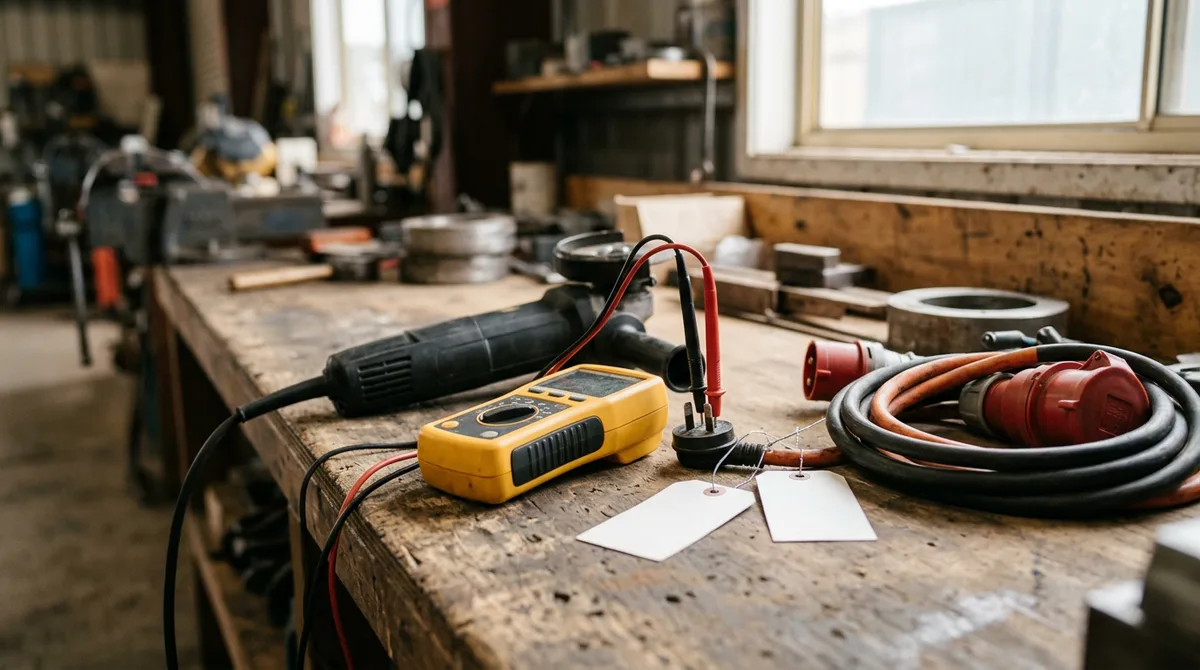
Once the appliance has passed its visual inspection, we perform the electrical tests suited to its construction.
Earth-continuity testing
For applicable earthed equipment, this checks the continuity and resistance of the protective earth path.
Insulation-resistance testing
This assesses the integrity of the insulation between live electrical parts and accessible components.
Leakage-current testing
Leakage testing measures current escaping from its intended electrical path. We leakage test applicable equipment, including three-phase appliances, as part of our enhanced testing process.
Polarity testing
Extension leads, power boards and other suitable equipment may require polarity testing to confirm that their conductors are connected correctly.
Portable RCD testing
Portable residual current devices have their own inspection and testing requirements, which can include measuring their operating time. Fixed safety switches on your boards are covered by our RCD testing service.
Not every item receives every test. The test method is selected according to the appliance, its construction and applicable requirements.
Step 5: We assess the results
The testing instrument provides measurements, but a competent person still needs to assess them alongside the appliance's visual condition.
An item only passes when it meets the relevant inspection and electrical testing criteria. A new tag cannot compensate for a damaged casing, unsafe modification or unsatisfactory electrical result.
Want us to test your equipment onsite?
Book a test and tag visitStep 6: We record the equipment and results
After testing, we create a record of the equipment and result. The information can include:
- Asset or equipment number
- Appliance description
- Location
- Test date
- Test result
- Defects identified
- Tester details
- Next testing date
You receive an equipment register and report, giving your business a useful record for future planning and safety management.
Step 7: We attach the tag
When an appliance passes, we attach the appropriate test tag. The tag shows that the item was inspected and tested on the recorded date, and it may also identify when the next test is due.
A tag is not a permanent guarantee of safety. Equipment can be damaged after testing, so workers should continue to check appliances before use. Warning signs include:
- New damage to the cord or plug
- Cracks in the casing
- Sparking
- Unusual heat
- Burning smells
- Intermittent operation
- Electric shocks or tingling
- Water or impact damage
An appliance showing any of these signs should be disconnected and reported immediately, even when its test tag is current.
What happens when an appliance fails?
Failed equipment is clearly identified and must be removed or isolated from service. Your business can then arrange for it to be:
- Assessed by an appropriately qualified person
- Repaired where legally permitted
- Replaced
- Permanently disposed of
Test and tag qualifications do not authorise every type of electrical repair. If repair work is required, it must be completed by someone legally permitted and competent to perform it. The appliance should be inspected and tested again before returning to service. If you are dealing with a failed item right now, our guide to managing an appliance that has failed testing sets out the steps in order.
Specialist welding-machine testing
Standard appliance testing is not always sufficient for welding machines.
We provide periodic inspection and electrical safety testing of welding machines, including voltage reduction device testing where applicable. This work supports compliance with AS 60974.4:2025, covering periodic inspection and testing of arc-welding equipment, and AS 1674.2:2025, covering electrical safety in welding and allied processes.
We can travel beyond our regular South-West service area for larger and specialist welder testing projects.
Preparing for your appointment
You can help the service run smoothly by:
- Making stored equipment available
- Providing access to plugs and power boards
- Locating equipment kept in vehicles
- Identifying equipment that must remain operational
- Providing previous registers where available
- Advising us about inductions or site-access requirements
- Reporting known equipment faults
Planning allows us to work efficiently while minimising interruption to your business.
Onsite testing across the South-West
Harvey Test & Tag is based in the Shire of Harvey and services businesses from Waroona to Dunsborough and east to Collie. Our onsite, industrially focused services include single and three-phase appliance testing, leakage testing, welding-machine and VRD testing, fire equipment servicing, and equipment registers and reports.
Learn more about our test and tag services, explore our fire equipment services and welding-machine testing, or contact us to arrange an onsite visit.
Frequently asked questions
Yes. We test single and three-phase appliances onsite, and applicable equipment including three-phase is leakage tested as part of our enhanced testing process.
No. The tests are selected according to the appliance, its construction and its class. A Class I earthed appliance is tested differently from a double-insulated Class II appliance, and not every item receives every test.
Yes. You receive an equipment register and report listing the equipment, its location, the test date, the result, any defects identified and the next test date, which is far more useful than a tag alone.
Make stored equipment available, provide access to plugs and power boards, locate anything kept in vehicles, flag equipment that must stay running, share previous registers and let us know about any site induction requirements.
Yes. Standard appliance testing is not always sufficient for welding machines. They need periodic inspection and electrical safety testing, including voltage reduction device testing where applicable, supporting compliance with AS 60974.4:2025.

Written by Kris Urwin, Owner and Manager of Harvey Test & Tag. Kris is electrical trade-qualified with more than 20 years of experience in electrical safety testing, fire equipment servicing and workplace safety across the South West.