Key takeaways
- You can test your own equipment, but the person doing it must be trained and genuinely competent.
- A licensed electrician is not always required for routine testing of plug-in appliances.
- Testing instruments need calibration, generally every 12 months, and that is an ongoing cost.
- A portable appliance tester automates measurements. It cannot replace the tester's judgement.
- Once calibration, wages, consumables and training are counted, in-house testing often saves little.
- The staff member doing the testing carries real responsibility if something is missed.
Can you test and tag your own equipment?
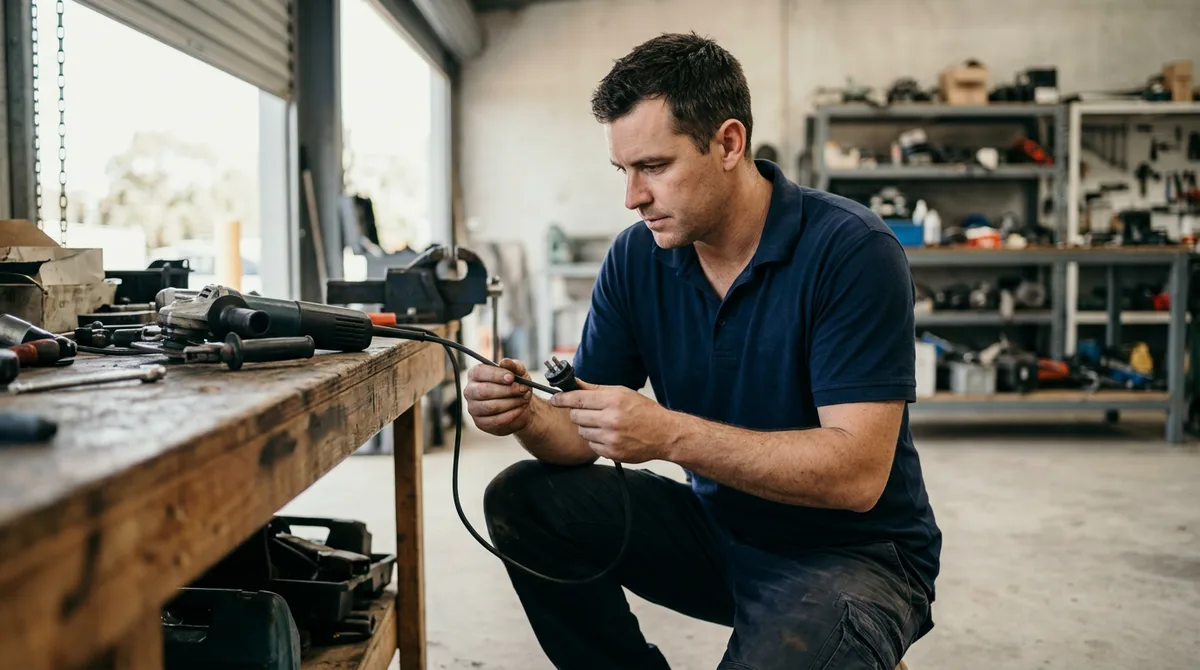
You may be able to test and tag your own workplace equipment, but completing a training course and purchasing a portable appliance tester may not make it the safest or most cost-effective option.
The person performing the work must be properly trained and competent. They need to know how to inspect each appliance, select the correct test, interpret the results and maintain accurate records.
The testing equipment must also be properly maintained and calibrated, generally every 12 months. When calibration costs, staff time, consumables, training and the initial equipment purchase are considered, an in-house program can cost considerably more than expected.
There is also a serious responsibility attached to the work. If a staff member selects the wrong test, incorrectly passes faulty equipment or overlooks a dangerous defect, they could potentially face personal liability if someone is injured or electrocuted. Training reduces the risk of mistakes, but it does not remove the tester's responsibility for carrying out the work correctly.
For most businesses, the real question is not simply whether they can test and tag their own equipment. It is whether doing so internally is safe, practical and financially worthwhile.
Do you have to be an electrician?
A licensed electrician is not always required to perform routine inspection and testing of plug-in electrical appliances.
In Western Australia, a competent person performing this work should have completed appropriate competency-assessed training in testing and tagging using a portable appliance tester.
However, test and tag training does not authorise someone to perform every type of electrical work. There is an important difference between:
- Inspecting and testing an in-service appliance
- Repairing an electrical appliance
- Modifying electrical wiring
- Working on a fixed electrical installation
Electrical repairs and installation work must be referred to someone who is appropriately licensed and competent to perform that work.
What makes someone competent?
A competent tester should be able to:
- Perform a thorough visual inspection
- Recognise different appliance classes
- Select the correct test for each item
- Use the testing instrument safely
- Interpret test readings accurately
- Identify and manage failed equipment
- Complete tags and records correctly
- Follow relevant standards and workplace procedures
- Understand the limits of their training and authority
Informal instruction from another worker, or a quick demonstration of the testing instrument, is not a substitute for competency. Selecting the wrong test or misinterpreting a result could allow unsafe equipment to remain in service.
Why is owning a PAT not enough?
A portable appliance tester, or PAT, can automate parts of the process. It cannot replace the judgement of the person operating it. The tester must still determine:
- Which test applies to the appliance
- Whether the equipment is Class I, Class II or another type
- How to connect the equipment correctly
- Whether it is safe to power the appliance during testing
- How to interpret unusual readings
- When leakage testing is appropriate
- Whether visible damage means the item must fail
A pass displayed by the instrument does not necessarily mean the appliance is safe. An instrument can confirm a measurement falls within a programmed limit. It cannot always decide whether a cracked casing, damaged plug, loose strain relief or unsuitable modification makes the appliance unsafe.
Your testing equipment must be calibrated
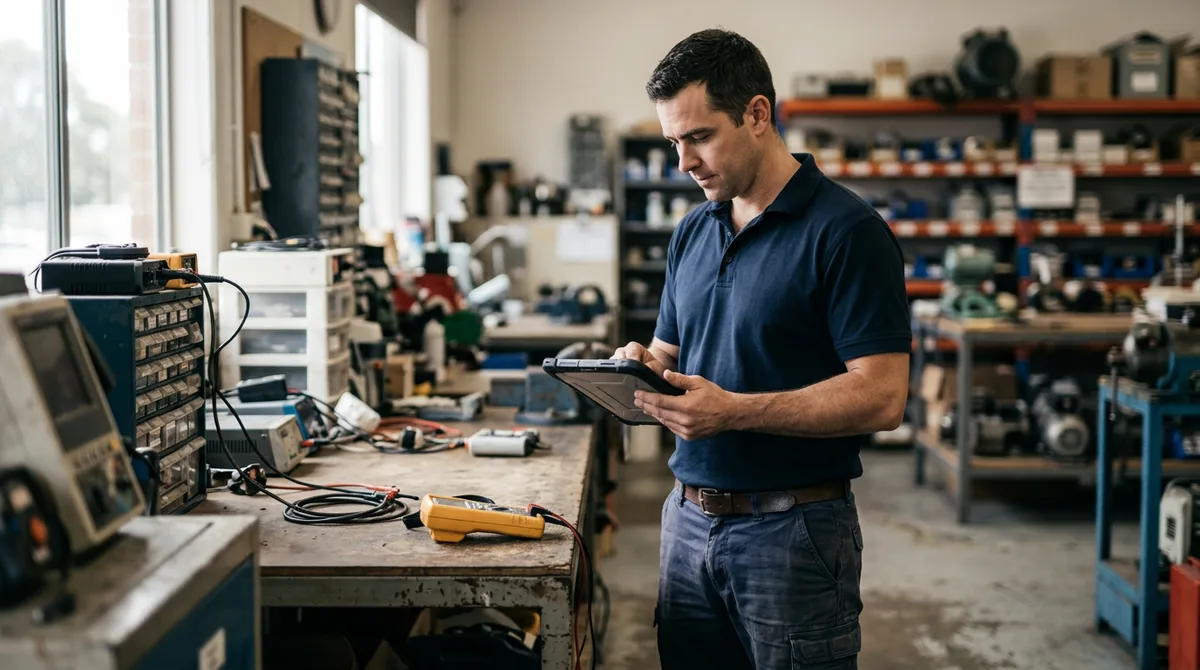
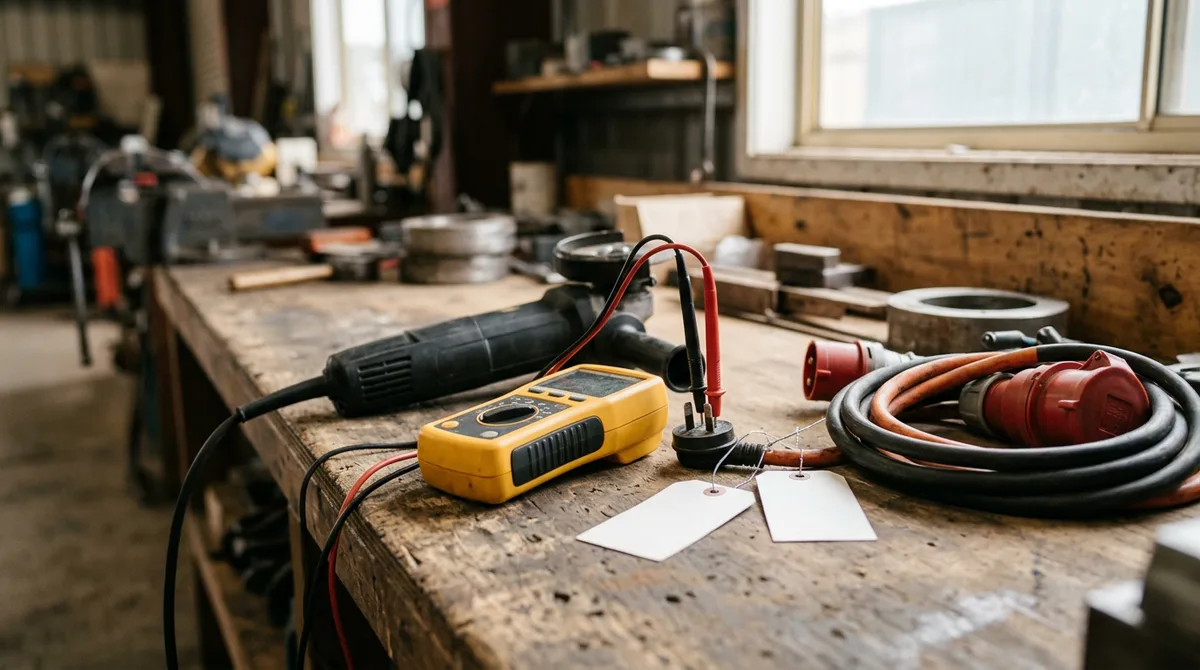
Purchasing a PAT is not a one-off expense. The instrument needs to be maintained and calibrated regularly, typically every 12 months, to help ensure that its measurements remain accurate and reliable.
Annual calibration can be a significant ongoing cost. The business may also need to manage:
- Calibration bookings and certificates
- Periods when the tester is unavailable
- Repairs or replacement if the instrument fails
- Test leads, adaptors and accessories
- Batteries, labels and other consumables
- Software, reporting or record-management costs
- Refresher training and staff competency
If the testing equipment is not properly maintained or its calibration is out of date, the business may not be able to rely confidently on the results.
What would you need for in-house testing?
A business establishing its own testing program may require:
- Competency-assessed staff training
- A suitable portable appliance tester
- Equipment suitable for single or three-phase testing
- Test leads and adaptors
- Pass and fail tags
- An equipment identification system
- A test register or reporting platform
- Procedures for failed equipment
- Access to relevant standards and instructions
- Annual testing-instrument calibration
- Time to complete the work and manage future schedules
The purchase price of the tester is only the beginning. Staff wages, lost productive time, calibration, consumables, administration and ongoing competency must all be included when comparing in-house testing with a professional service.
Want us to test your equipment onsite?
Book a test and tag visitIs testing your own equipment really cheaper?
For many small and medium-sized workplaces, the figures do not support bringing testing and tagging in-house.
Consider an office that would pay approximately $1,000 per year for professional testing and tagging. An internal program might involve:
- Approximately $500 per year for testing-equipment calibration
- One full day of wages for the staff member performing the work
- Tags, labels and other consumables
- Time spent maintaining registers and arranging future testing
- The initial purchase of the testing instrument and accessories
- The cost of competency-assessed training
- Future refresher training or retraining when staff change
Once these expenses are combined, the business may save little or nothing. In some cases, conducting the work internally may cost more than using a professional, while also transferring the testing responsibility and associated risk to the business and the staff member performing the work.
What are the risks for the staff member?
A trained employee who tests and tags workplace equipment takes on a significant responsibility.
If that person selects an unsuitable test, uses the instrument incorrectly, overlooks visible damage or records a failed appliance as safe, the consequences could be severe. Someone may receive an electric shock, suffer serious injury or be electrocuted.
If an incident is linked to a testing mistake, the staff member's decisions and competency may be investigated. Depending on the circumstances, both the organisation and the individual tester could face consequences, including potential personal liability.
Completing a course does not automatically protect a staff member if the work is performed incorrectly. The tester must remain competent, follow the correct procedures, use calibrated equipment and maintain accurate records.
Businesses should carefully consider whether it is reasonable to place this level of responsibility on an employee whose primary role is not electrical safety testing.
What records need to be maintained?
A testing record should include the tester's name, the test date, the result and when the next test is due. Depending on the system used, it may also include:
- Asset or equipment number
- Appliance description
- Equipment location
- Electrical class
- Tests performed
- Defects identified
- Corrective action
- Retest date
A tag can form part of the record, but an equipment register provides a more complete overview of the workplace's testing program. We supply registers and reports as part of our test and tag service.
What happens if an appliance fails?
A failed appliance should be clearly identified and immediately removed or isolated from service. The business can then arrange for the equipment to be:
- Assessed by an appropriately qualified person
- Repaired where permitted
- Replaced
- Permanently disposed of
Test and tag competency alone does not allow someone to carry out every type of electrical repair. Once repairs have been completed, the appliance should be inspected and tested before being returned to service. We cover what to do after a failed electrical safety test in more detail, including records and when equipment can go back into use.
Is in-house testing worth it?
An internal testing program may suit a large organisation with trained personnel, suitable calibrated equipment and an established electrical-safety management system.
For many small and medium-sized businesses, outsourcing is safer, simpler and more economical. The business does not need to manage:
- Staff training and ongoing competency
- Testing instruments and adaptors
- Annual equipment calibration
- Staff changes and retraining
- Inspection schedules
- Equipment registers and reporting
- Specialist single and three-phase requirements
- Failed-equipment procedures
- Consumables and software
- Time away from normal duties
When should you use a professional tester?
Professional testing may be the best option when:
- Staff have not completed suitable assessed training
- The workplace does not own calibrated testing equipment
- The workplace uses three-phase equipment
- Specialist leakage testing is required
- Equipment is used in industrial conditions
- Existing records are incomplete
- Testing is overdue
- There is a large or varied equipment inventory
- The business needs a formal register and report
- Internal testing would interrupt normal work
- The cost of training, calibration and staff time outweighs any potential saving
- The business does not want employees carrying the responsibility and risk of testing workplace equipment
Professional testing across the South-West
Harvey Test & Tag provides testing for single and three-phase appliances, including leakage testing of applicable equipment.
Based in the Shire of Harvey, we service businesses from Waroona to Dunsborough and east to Collie, across the areas we cover. We also travel further for larger projects and welding-machine testing.
Before investing in equipment and training, compare the complete cost of doing the work internally, including annual calibration, staff wages, consumables, record keeping and ongoing responsibility. For many businesses, professional testing is the more practical choice. Explore our electrical test and tag services or request a quote for onsite testing.
Frequently asked questions
No. A licensed electrician is not always required for routine inspection and testing of plug-in appliances. The person doing the work should have completed competency-assessed training in testing and tagging with a portable appliance tester.
Testing instruments generally need calibration every 12 months so their measurements stay accurate and reliable. If calibration is out of date, the business may not be able to rely on the results.
Often not. Once annual calibration, staff wages, consumables, training, record keeping and refresher training are added together, an internal program can cost as much as a professional service while transferring the risk to your staff.
Potentially. If an incident is linked to a testing mistake, the tester's decisions and competency may be investigated, and both the organisation and the individual could face consequences depending on the circumstances.

Written by Kris Urwin, Owner and Manager of Harvey Test & Tag. Kris is electrical trade-qualified with more than 20 years of experience in electrical safety testing, fire equipment servicing and workplace safety across the South West.