Key takeaways
- VRD testing checks whether a welding machine's Voltage Reduction Device reduces the output voltage and responds as it should.
- A VRD lowers the open-circuit voltage at the welding output when the operator is not welding.
- A welder can still produce a weld when a safety function needs attention, so testing gives evidence the VRD works.
- An RCD does not protect a person from electric shock from a welding electrode, so it is not a substitute for a VRD.
- If a VRD fails testing, stop using the welder and never bypass the VRD to keep working.
What is VRD testing?
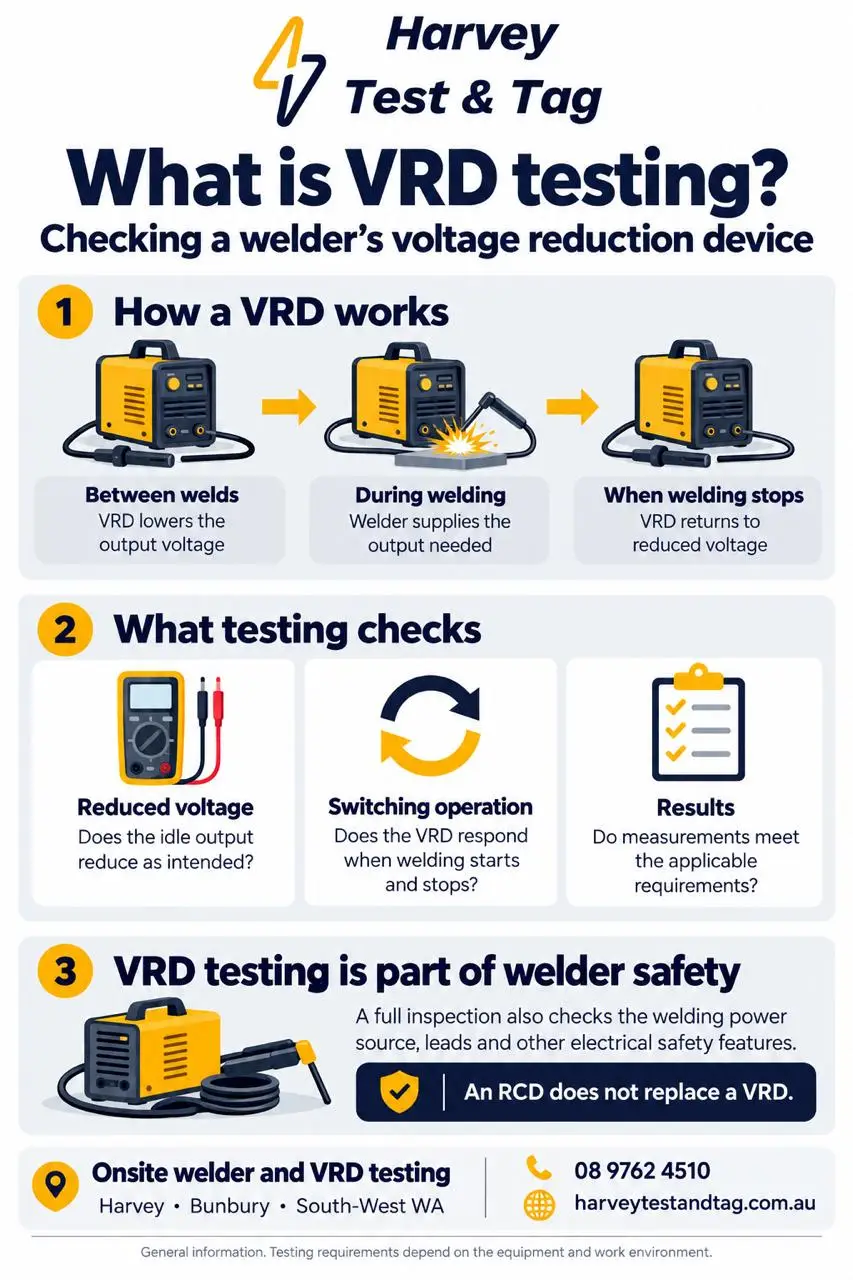
VRD testing checks whether a welding machine's Voltage Reduction Device works correctly. A VRD reduces the voltage at the welding output when you are not welding, helping to lower the risk of electric shock. Testing confirms that the device reduces the voltage and responds as it should.
For workshop owners, maintenance teams and welding contractors, this check forms part of looking after welding equipment. A machine may still produce a weld even when a safety function needs attention.
What does VRD mean on a welder?
VRD stands for Voltage Reduction Device. You may also hear it called a voltage reducing device.
When a welder is switched on but no welding arc is present, there can still be voltage between its output terminals. This is called open-circuit voltage.
Think of a stick welder sitting between welds. Although the operator is not welding, the electrode can still be live. A VRD lowers the available voltage during this idle period.
When the operator starts welding, the device allows the machine to supply the output needed for the weld. Once welding stops, it returns the output to a reduced voltage. Manufacturers may build the VRD into the welder or provide a compatible external unit.
Why is VRD testing important?
An operator can receive an electric shock through contact with the electrode or exposed parts of the welding circuit. The danger can increase in hot, humid or damp conditions, including when clothing becomes wet with sweat.
SafeWork NSW has documented a serious incident in which a worker received electric shocks while changing a welding rod in a hot, humid confined space. The welding equipment had no hazard or voltage reducing device.
A functioning VRD helps reduce exposure to open-circuit voltage. Testing gives you evidence that this safety function operates, rather than relying on the fact that the machine still welds.
You still need suitable equipment, safe work procedures and other controls for the task. A VRD does not remove the need to manage welding fumes, fire risks, damaged leads or confined-space hazards. WorkSafe WA's welding code addresses these risks alongside electrical safety.
What does VRD testing check?
A competent tester checks the device's operation against the requirements that apply to the welding equipment. The assessment covers whether the output voltage reduces correctly and whether the VRD operates within specification.
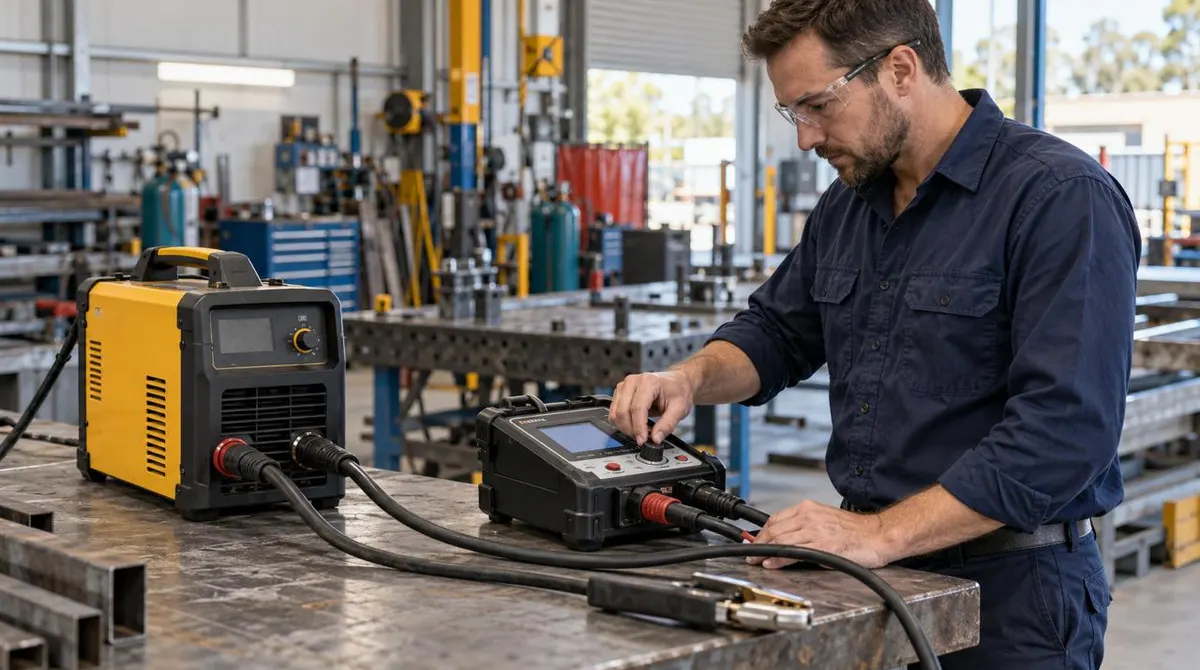
At Harvey Test & Tag, we use specialist equipment to check VRD operation and measure peak voltages as part of our welder testing service.
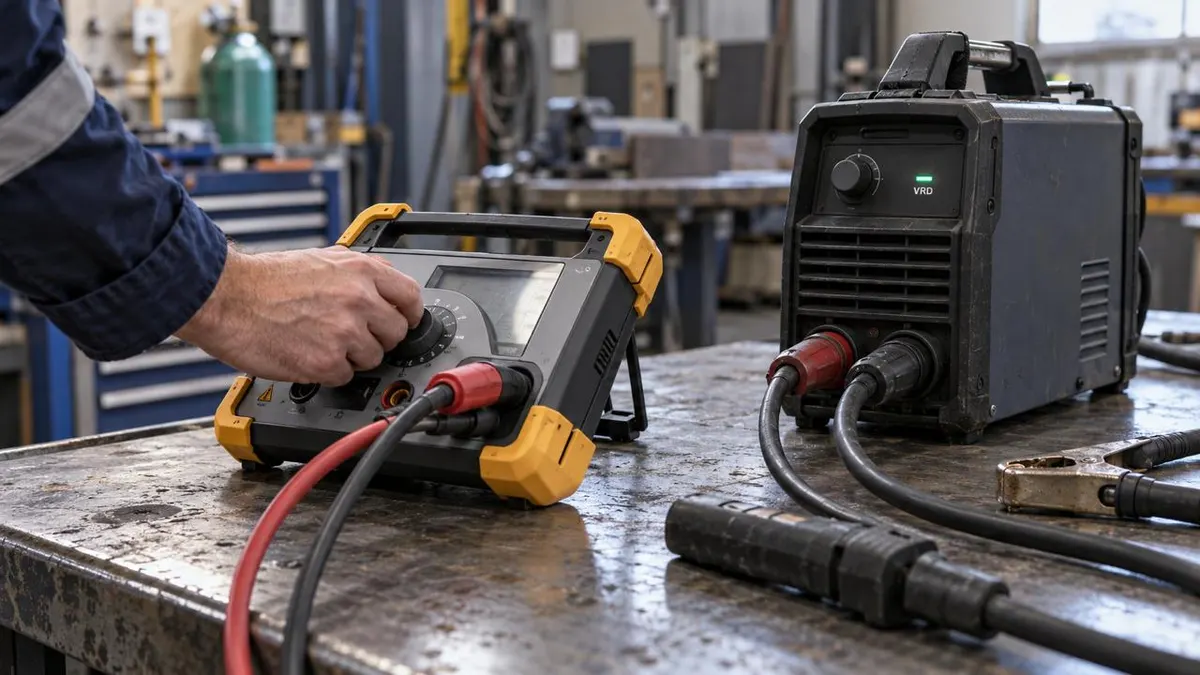
Reduced output voltage
The tester measures the output to establish whether the VRD reduces the voltage as intended when the welder is idle.
Switching operation
The tester checks how the device responds when welding starts and stops. A voltage reading at rest alone does not explain how the device behaves through that cycle.
Results against the applicable requirements
The tester assesses the measurements against the relevant equipment specifications and testing requirements. VRD testing needs suitable instruments and an understanding of the machine's operation. SafeTac, a WA manufacturer of VRDs, supplies dedicated test equipment for checking these devices.
Is VRD testing the same as normal test and tag?
VRD testing checks a specific safety function on the welding output. General electrical test and tag covers a different scope. Our guide to what test and tag is explains what that covers.
A full welder inspection also considers the condition of the welding power source, its leads and other electrical safety features. Harvey Test & Tag's service includes welding leads, torches and clamps, together with applicable insulation resistance and earth continuity checks, the same kind of electrical tests described in how we test and tag appliances.
When booking testing, ask whether the inspection includes VRD testing and the wider welding equipment assessment. A general electrical test tag alone does not tell you which welding-specific checks the tester completed.
Want us to test your equipment onsite?
Book a test and tag visitDoes an RCD protect against welding electrode shocks?
An RCD, often called a safety switch, provides protection against certain faults on the power supply side of the equipment.
SafeWork NSW states that an RCD will not protect a person from electric shock from a welding electrode. The RCD and VRD therefore serve different purposes, and you should not treat one as a substitute for the other. Both still need checking: see our RCD testing service.
Which welders need VRD testing?
VRDs are commonly associated with manual metal arc welding, also called MMA or stick welding.
Check the manufacturer's instructions to establish whether your machine has a VRD, which welding modes use it and how the manufacturer requires it to operate. On a multi-process welder, the safety arrangements can differ between operating modes.
Your workplace also needs to consider the welding task and environment when selecting suitable equipment. WorkSafe WA notes that electrical risks differ between welding processes and working conditions.
How often should VRD testing be carried out?
Arrange a testing schedule that accounts for the manufacturer's instructions, equipment use, working conditions and site requirements.
WorkSafe WA's welding code requires businesses to maintain welding equipment, including electrical safety devices, and ensure that welding machines are properly maintained, repaired and tested.
Review your inspection arrangements after damage, a suspected fault or repair. Do not wait for a scheduled inspection if the equipment appears unsafe.
Harvey Test & Tag can help you plan welder testing around your equipment and site requirements.
What happens if a VRD fails testing?
Stop using the affected welder and follow your workplace procedure to prevent someone else from using it.
Arrange assessment and any necessary repairs by an appropriately qualified person. Complete the required checks before returning the machine to service. Do not bypass the VRD to keep working.
SafeWork NSW advises workplaces to use a qualified electrician for electrical repairs and to avoid using damaged or faulty welding equipment. Our guide to what happens when equipment fails testing covers taking an item out of service.
Book VRD and welder testing in the South-West
Harvey Test & Tag provides onsite welder and VRD testing across Harvey, Bunbury, Australind, Busselton, Collie and the surrounding South-West.
We test welding power sources to AS 60974.4:2025, with detailed barcoded reports for your equipment records.
Call 08 9762 4510 or request a quote with the number and types of welders you need tested.
Frequently asked questions
VRD stands for Voltage Reduction Device, sometimes called a voltage reducing device. It lowers the open-circuit voltage at the welding output when the operator is not welding, then lets the machine supply full output once welding starts.
No. An RCD protects against certain faults on the power supply side of the equipment. SafeWork NSW states that an RCD will not protect a person from electric shock from a welding electrode, so the two devices serve different purposes.
A competent tester measures whether the VRD reduces the output voltage when the welder is idle, checks how the device responds when welding starts and stops, and assesses the results against the requirements that apply to the equipment.
Set a schedule based on the manufacturer's instructions, how the equipment is used, the working conditions and your site requirements. Check it again after damage, a suspected fault or a repair, and do not wait for a scheduled inspection if the welder appears unsafe.
Stop using the welder and follow your workplace procedure so nobody else uses it. Have it assessed and repaired by an appropriately qualified person, complete the required checks before it returns to service, and never bypass the VRD to keep working.

Written by Kris Urwin, Owner and Manager of Harvey Test & Tag. Kris is electrical trade-qualified with more than 20 years of experience in electrical safety testing, fire equipment servicing and workplace safety across the South West.