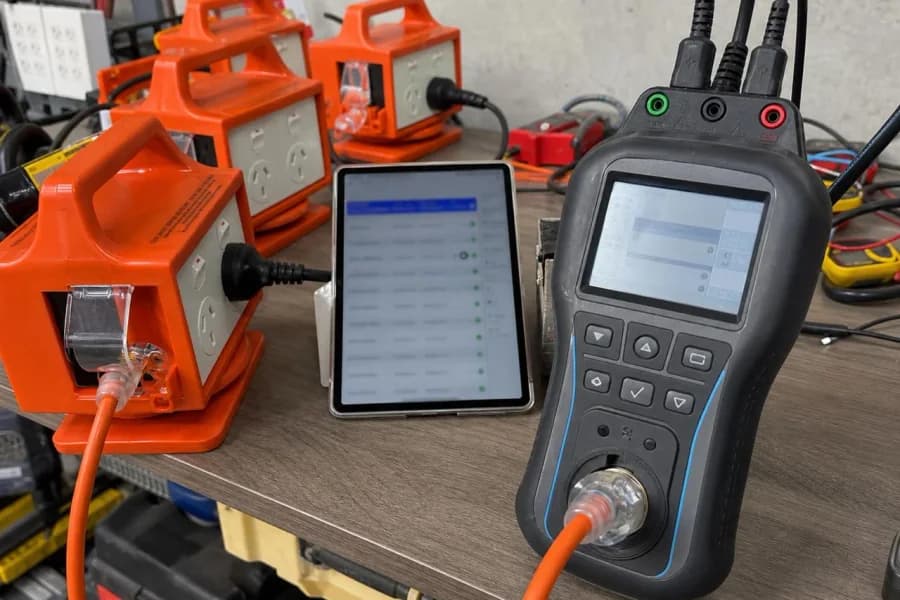
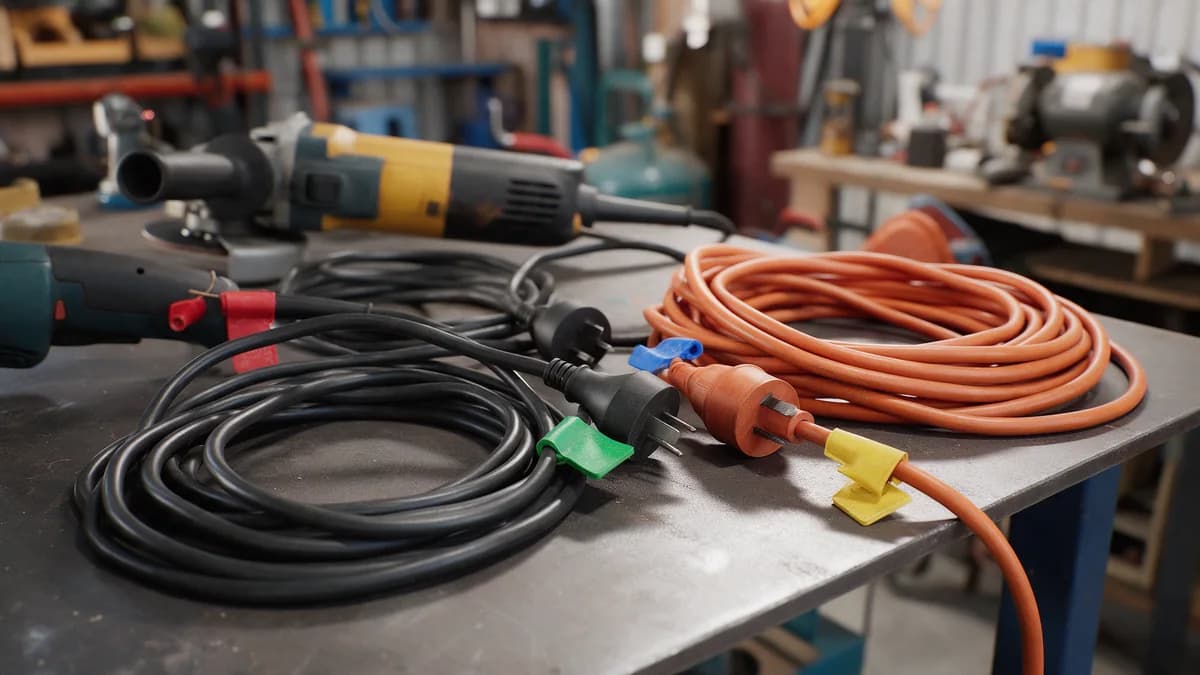
You may see these coloured tags on power tools, extension leads and other electrical equipment. They help workers and site supervisors recognise the testing period at a glance.
You should also read the dates and result on the tag. The colour system does not apply in the same way to every workplace, and a coloured sticker alone cannot confirm an item’s safety or testing status.
Test and Tag Colour Chart
The common quarterly test and tag colour chart follows this sequence:
| Tag Colour | Testing Period |
|---|---|
| Red | December, January and February |
| Green | March, April and May |
| Blue | June, July and August |
| Yellow | September, October and November |
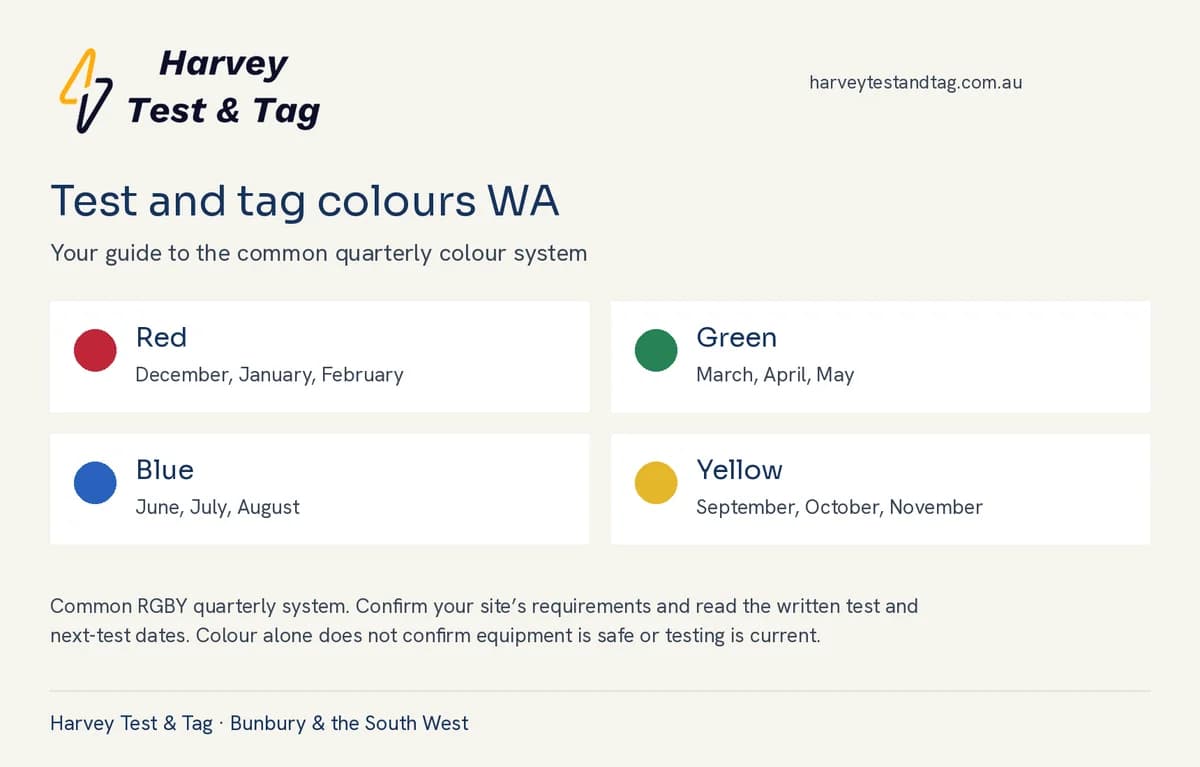
Under this system, a tester would use a blue tag for equipment tested in July and a yellow tag for equipment tested in October.
The colours identify the testing period. Read the written next-test date to establish when another test is due.
SafeWork SA’s construction industry guidance documents this recommended sequence and notes that builders may have their own requirements. Check which system your WA site uses before relying on the chart. [1]
Are Test and Tag Colours Mandatory in WA?
There is no single colour rule covering every electrical item in every WA workplace.
WorkSafe WA’s Managing electrical risks in the workplace code of practice says a testing tag may use colour coding to identify the testing month. Its general guidance does not make the RGBY sequence compulsory for all workplaces.
Construction and demolition sites have additional requirements. WorkSafe WA identifies AS/NZS 3012:2010 as the applicable construction and demolition standard under the relevant regulations.
Your site may also specify a colour system through its electrical safety procedures or contractor requirements. Confirm those arrangements with the site supervisor and your testing provider. [2]
How to Read an Electrical Test Tag
Start with the written information, even when you recognise the colour.
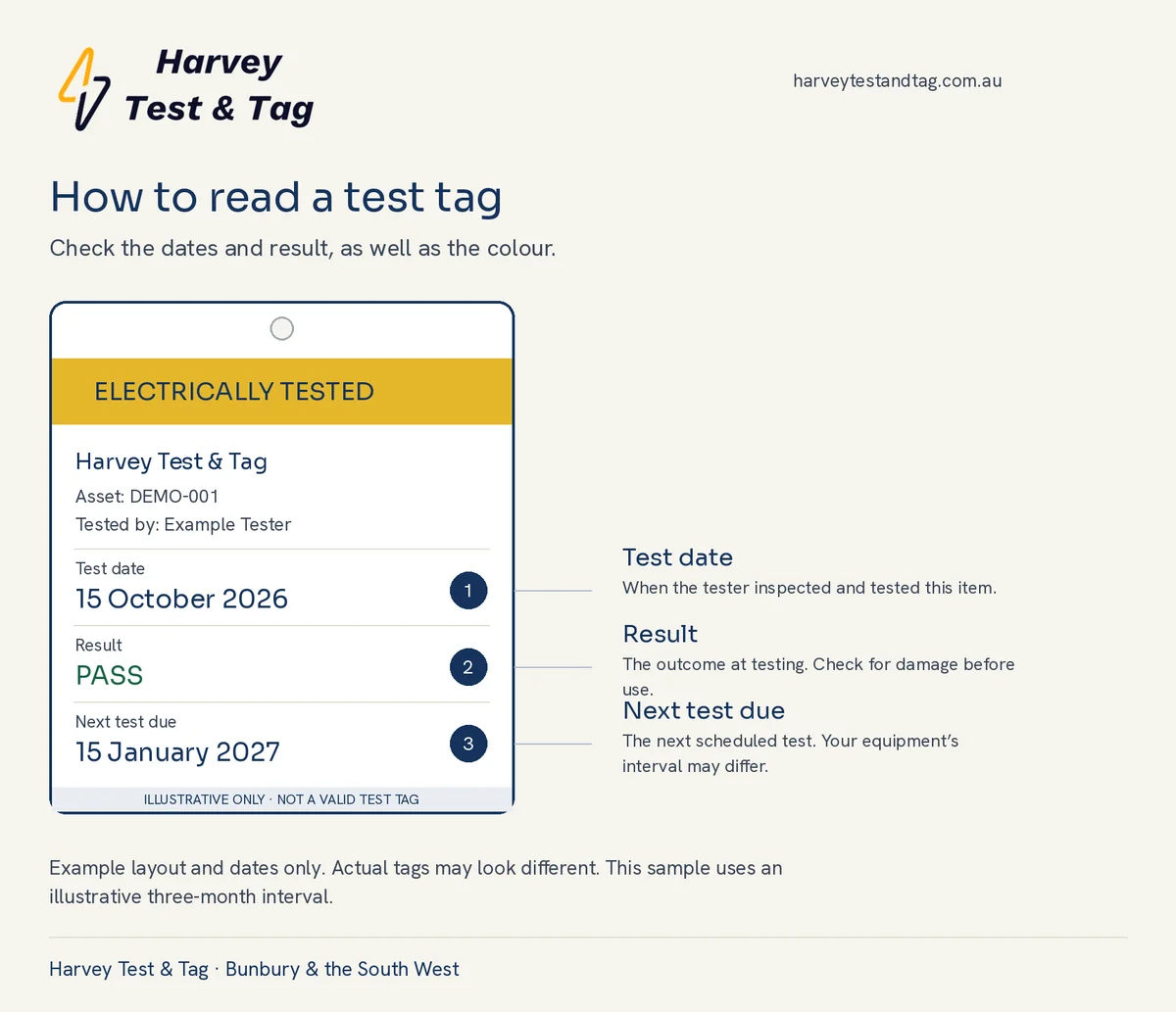
Test Date
The test date tells you when the tester inspected and tested the equipment.
Check the year as well as the day and month. Because the colour sequence repeats, two tags of the same colour could relate to tests carried out a year apart.
Test Result
Read the recorded result. A pass indicates the equipment met the relevant inspection and testing criteria at that time.
Continue checking for damage before use. Someone could crush a lead or crack a plug after testing.
Next-Test Date
The next-test date tells you when the equipment is scheduled for another inspection and test.
For example, an item tested on 15 October might have a next-test date of 15 January under a three-month programme. That is an example, rather than a schedule for every appliance.
Tester and Equipment Details
WorkSafe WA requires relevant testing records to identify the tester, test date, outcome and next testing date. Businesses can keep these details on a tag, in a register or through a combination of records.
An asset number helps you match the tag to the correct equipment record. [2]
If you would like more background on the checks behind the tag, read our guide to what test and tag involves.
Want us to test your equipment onsite?
Book a test and tag visitDoes the Colour Tell You When Testing Is Due?
Use the colour as a quick reference, then confirm the written date.
A yellow tag under the RGBY system identifies testing during September, October or November. It does not tell you the exact testing day, year or next scheduled test date.
This matters when equipment moves between sites. A contractor arriving with several tools should check each item’s dates and the receiving site’s requirements, rather than assuming matching colours mean the tools are ready for use.
At Harvey Test & Tag, we record each tested item’s location, result and next scheduled test date in a barcoded asset report. You can use that report to check individual items and plan future testing. [3]
Do Offices and Workshops Follow the Same System?
An office appliance and a workshop tool can face different conditions, even within the same business.
Consider a monitor that stays on a desk compared with a grinder that workers carry between jobs. The grinder and its lead may face impacts, dust and repeated movement.
Your testing provider should consider the equipment, its use, operating conditions and applicable requirements when planning the testing programme. Harvey’s electrical test and tag service covers office appliances, power tools and suitable single-phase and three-phase workshop equipment. [3]
When booking, explain where workers use the equipment and whether they take it onto other sites. Include any colour-coding instructions supplied by your site manager.
What if a Tag Is Missing, Unreadable or Out of Date?
Report the issue to the person responsible for electrical equipment at your workplace.
They should check the equipment’s identity, testing records and site procedures to establish what needs to happen next. Arrange inspection or testing where the status cannot be confirmed or testing is overdue.
Avoid copying dates from another appliance or attaching a replacement sticker without checking the records. Two similar tools may have different testing histories.
Treat visible damage or a suspected fault as a separate safety issue. Stop using the item and follow your workplace’s process to prevent further use while someone assesses it. Electrical testing does not replace checks between scheduled inspections. [4]
Harvey identifies failed items, records the fault and explains the repair or replacement options. Read more about what happens when an appliance fails test and tag. [3]
Frequently asked questions
Under the common RGBY quarterly system: December to February, red. March to May, green. June to August, blue. September to November, yellow. Confirm that your site follows this system before using the colour to interpret a tag.
A red quarterly test tag can identify testing during December, January or February. Read the wording and result to distinguish it from a danger or out-of-service label. Follow any instruction that prohibits using the equipment.
The common quarterly sequence repeats each year. Check the written year and next-test date, because the colour cannot distinguish this year’s testing from an earlier year.
No. Equipment can suffer damage after it passes testing. For example, an extension lead could pass inspection and then become damaged when someone traps it under a door. Report damage and stop using suspect equipment, even if its next-test date has not arrived.
Attaching a sticker does not establish an inspection or test result. If a tag falls off or becomes unreadable, ask your workplace’s responsible person or testing provider to check the equipment record and arrange the appropriate action.
Arrange Test and Tag for Your Workplace
Harvey Test & Tag provides onsite electrical testing across Bunbury and the South West, from Waroona to Dunsborough and inland to Collie.
We inspect and test suitable single-phase and three-phase equipment and provide barcoded asset reports to help you track results and upcoming testing dates. [3]
Contact Harvey Test & Tag with your site location, approximate item count and equipment types to request a quote. Mention any site-specific tag colours or contractor requirements so we can discuss them before your visit.
Sources
1. SafeWork SA: Building and Construction Industry Guideline
2. WorkSafe WA: Managing electrical risks in the workplace, Code of practice

Written by Kris Urwin, Owner and Manager of Harvey Test & Tag. Kris is electrical trade-qualified with more than 20 years of experience in electrical safety testing, fire equipment servicing and workplace safety across the South West.